


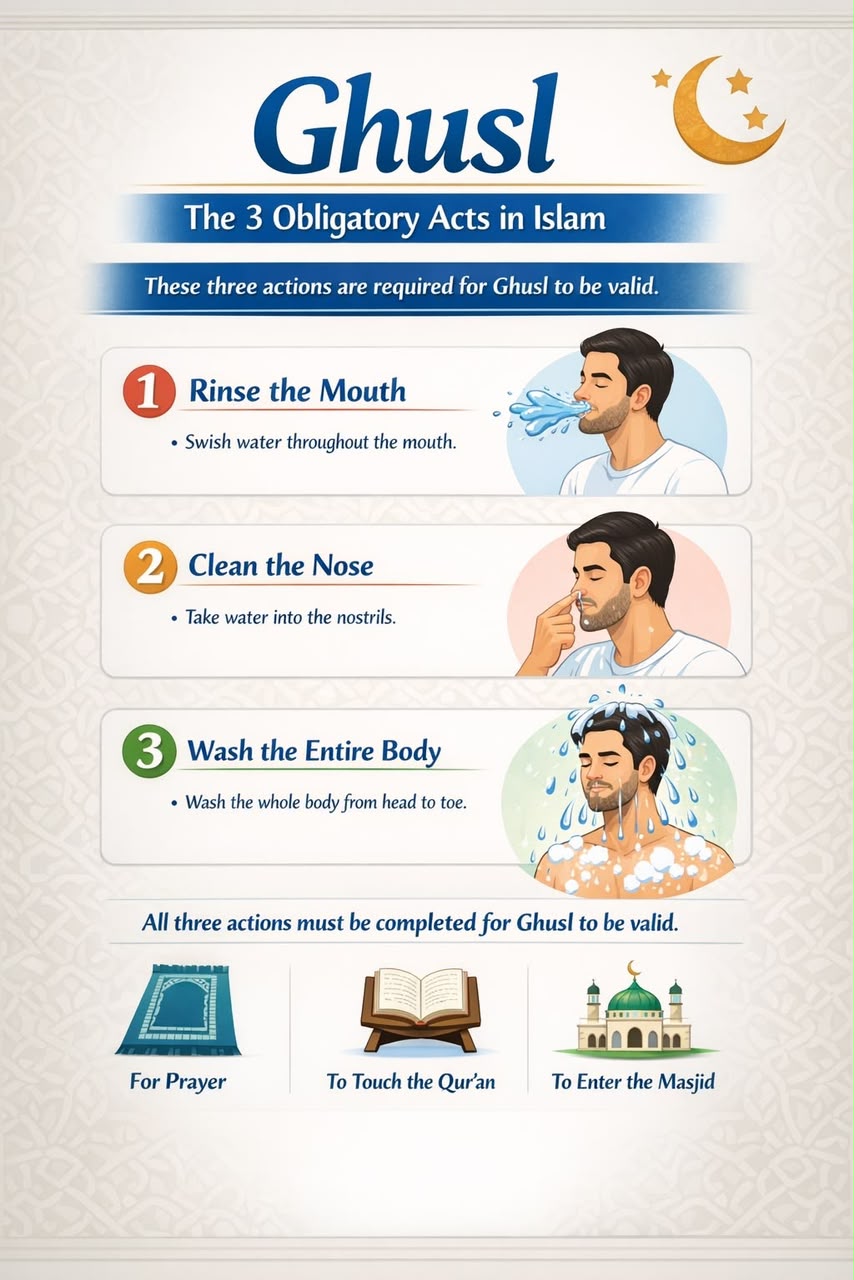
Friday is a day of special worship in Islam, and the preparation for Jumuʿah is itself part of the dignity of the day. Among the practices connected with Friday is ghusl, the ritual bath that Muslims are encouraged to perform before attending the Friday prayer.
For some people, Friday ghusl may feel like nothing more than taking a shower before going to the mosque. But in Islam, cleanliness and worship are closely connected. Preparing physically for Jumuʿah reflects the importance of the gathering and shows consideration for the people who will worship alongside us.
The Prophet Muhammad ﷺ placed particular emphasis on cleanliness on Friday. He said, “When one of you comes to Friday, let him perform ghusl.” This hadith is recorded in Sahih al-Bukhari and Sahih Muslim.
Scholars have discussed whether the command in this hadith establishes an obligation or a strongly emphasised recommendation, with different positions found in Islamic jurisprudence. Regardless of that difference, there is no doubt that Friday ghusl has an important place in the Sunnah and is something Muslims should take seriously.
The purpose of ghusl is not simply to make a person feel fresh. Jumuʿah is a gathering in which people stand close together in the mosque, and Islam places great importance on cleanliness and avoiding anything that could cause discomfort to others.
This is especially relevant when considering personal hygiene.
A person may have spent the morning working, travelling through traffic, exercising or dealing with the heat. In a warm environment, sweat and body odour can become noticeable. Islam does not ask Muslims to ignore this simply because they are attending an act of worship. Instead, the Sunnah encourages proper preparation.
The Prophet ﷺ also encouraged Muslims attending Jumuʿah to clean themselves, use a siwak or other means of cleaning the mouth, and wear good clothing. Perfume is also encouraged for men when attending the mosque.
These practices demonstrate an important principle: coming before Allah in worship should be approached with care and respect.
Friday ghusl can therefore become part of a Muslim’s mental preparation as well.
When a person takes time to bathe, dress properly and prepare for Jumuʿah, it creates a transition between ordinary activities and the Friday gathering. The believer is reminded that this is not just another appointment to attend.
It is a meeting for worship.
This attitude is important because people can easily become too familiar with routines. Jumuʿah happens every week, and because of its regularity, a person may eventually stop appreciating its significance.
The same mosque. The same prayer. The same weekly schedule.
But every Friday is another opportunity to stand before Allah.
Preparing properly can help restore that sense of importance.
There is also a social dimension to Friday cleanliness. Islam teaches Muslims to consider the people around them. A person should not enter the mosque carrying unpleasant smells that could disturb others during Salah or the khutbah.
The Prophet ﷺ specifically instructed people who had eaten foods with strong odours to avoid disturbing others in the mosque. This demonstrates that consideration for fellow worshippers is part of Islamic etiquette.
Good hygiene is therefore not merely about personal appearance. It is also about respecting the community.
This is particularly important in crowded Friday congregations where people may stand shoulder to shoulder. Clean clothing, a clean body and fresh breath make the experience more comfortable for everyone.
Friday ghusl also reminds Muslims that Islam pays attention to both the spiritual and physical dimensions of worship.
Islam does not teach believers to neglect their bodies in pursuit of spirituality. Cleanliness, personal hygiene and good appearance can all be part of preparing for worship when done with the right intention.
A Muslim can therefore approach Friday morning or the period before Jumuʿah with a simple intention: I am preparing myself to attend the house of Allah, listen to His remembrance and stand before Him in prayer.
That intention can transform an ordinary act of washing into an act connected to worship.
The preparation does not end with ghusl. A Muslim should also consider the Sunnah practices associated with Friday as a whole. Wearing clean and appropriate clothing, using fragrance where appropriate, arriving early, listening attentively to the khutbah and avoiding unnecessary distractions all contribute to honouring the day.
The point is not to make Friday unnecessarily complicated. It is to approach it consciously.
Instead of waking up on Friday and rushing through the morning before barely making it to the mosque, a Muslim can deliberately create time for preparation.
Take the bath. Clean yourself properly. Put on suitable clothing. Use fragrance if appropriate. Leave for the mosque early. Spend some time remembering Allah. Listen attentively when the khutbah begins. Then perform Jumuʿah with focus.
These simple actions can change the way a person experiences Friday.
Most importantly, Friday ghusl should not become an outward ritual without an inward purpose. Islam is not asking us merely to look clean while our hearts remain distracted.
The physical preparation should remind us to prepare spiritually as well.
Before leaving for Jumuʿah, ask Allah to forgive your sins. Ask Him to strengthen your iman. Ask Him to make the khutbah beneficial to you. Ask Him to help you leave the mosque with something meaningful that you can carry into the following week.
Friday comes every seven days.
Each time it arrives, we have another opportunity to clean ourselves, prepare our hearts and return to Allah.
Ghusl may begin with water, but the preparation for Jumuʿah should ultimately lead to something deeper: a believer approaching the day with cleanliness, dignity, humility and awareness of Allah.
