


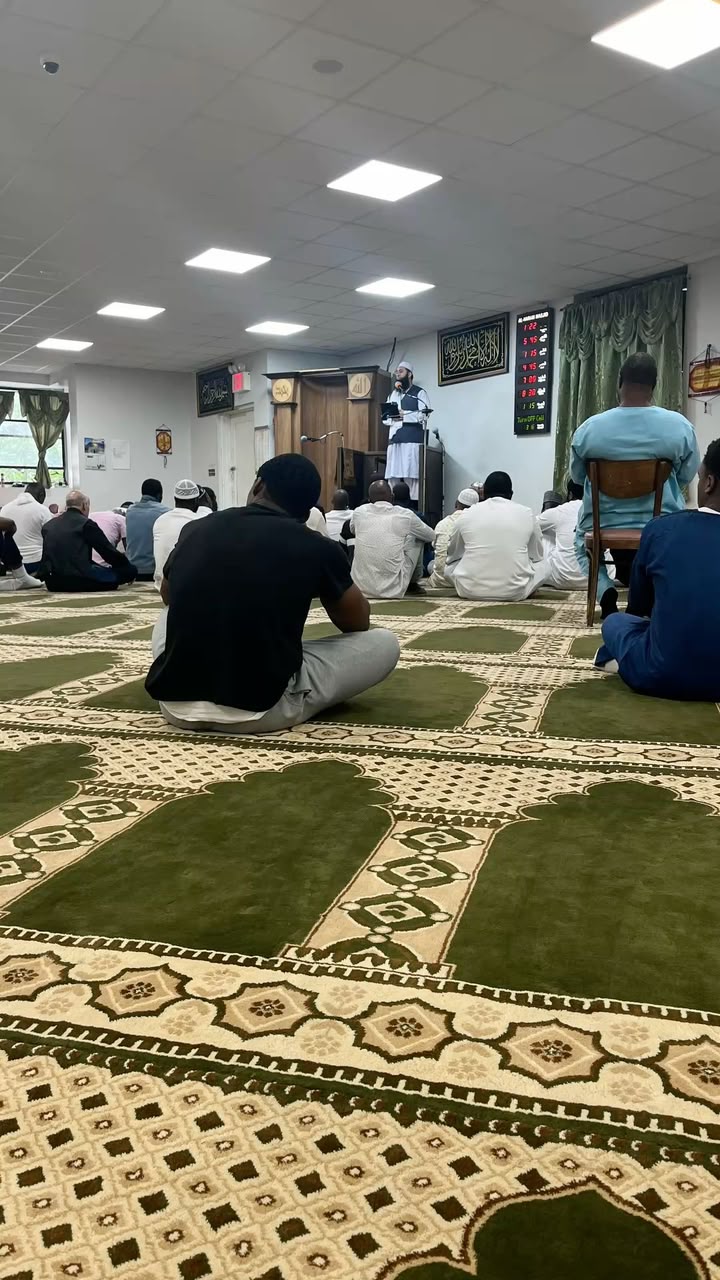
Friday is familiar to every Muslim. We know it as the day of Jumu’ah, the day when Muslims gather for the weekly congregational prayer. We know about the khutbah, the two rak’ahs of Jumu’ah and the encouragement to send abundant salawat upon the Prophet Muhammad ﷺ.
But there is much more to Friday than the prayer itself.
The Prophet ﷺ gave this day a special status and taught Muslims practices connected with it. Some of these are well known, while others receive far less attention.
Understanding these details changes the way we approach Jumu’ah. It becomes more than simply attending the mosque at a particular time. It becomes an opportunity to deliberately prepare ourselves, remember Allah and make better use of a day that Allah has given a special place in the week.
FRIDAY IS THE BEST DAY OF THE WEEK
The Prophet ﷺ said:
“The best day on which the sun has risen is Friday.”
He then mentioned that Adam (AS) was created on that day, entered Paradise on that day and was expelled from it on that day, and that the Last Hour will take place on a Friday.
This hadith, recorded in Sahih Muslim, gives us one of the clearest reasons Muslims should view Friday differently from an ordinary day.
It is not simply the fifth day of the Islamic week. It has a unique position in the religious tradition.
WHY IS IT CALLED JUMU’AH?
The Arabic word “Jumu’ah” is connected to gathering. This is appropriate because Muslims are commanded to leave their ordinary activities and gather for the Friday prayer.
Allah says:
“O believers! When the call to prayer is made on Friday, then proceed to the remembrance of Allah and leave all business.”
Qur’an 62:9
The verse shows that Jumu’ah is not supposed to be treated like an interruption to our normal activities. When its time arrives, the believer temporarily puts worldly business aside for the remembrance of Allah.
That is particularly relevant today, when work, business, phones and other responsibilities can easily dominate our attention.
Friday gives the Muslim a regular opportunity to stop and reset.
THE PROPHET ﷺ ENCOURAGED EARLY ARRIVAL
One of the Sunnahs many Muslims know about but do not always practise is arriving early for Jumu’ah.
The Prophet ﷺ described the rewards for those who arrive at different times before the khutbah. The earlier a person arrives, the greater the reward described in the hadith.
This changes the way we should think about Jumu’ah.
The objective is not simply to arrive before the imam begins the prayer.
There is value in making the journey to the mosque early, sitting calmly, remembering Allah and preparing yourself mentally for the khutbah and prayer.
For someone who is able to do so, rushing through the door at the last minute should not be the ideal.
GHUSL IS PART OF THE FRIDAY PREPARATION
The Prophet ﷺ strongly emphasised bathing on Friday.
He said:
“Ghusl on Friday is obligatory upon every adult.”
Scholars have discussed the precise legal meaning of this wording and how it should be understood alongside other evidence, but there is no doubt that performing ghusl for Jumu’ah is an established Sunnah of great importance.
The Prophet ﷺ also taught Muslims to clean themselves, use perfume and wear good clothing when going to the Friday prayer.
This tells us something about the character of Jumu’ah. The believer is not simply attending another prayer. There is a deliberate preparation for the gathering.
THERE IS A SPECIAL HOUR ON FRIDAY
Perhaps one of the most fascinating things about Friday is that the Prophet ﷺ told us about a particular period during the day when a Muslim’s supplication is accepted.
The Prophet ﷺ said:
“There is an hour on Friday during which no Muslim servant stands and prays, asking Allah for something, except that He will give it to him.”
The exact timing of this hour has been discussed extensively by scholars because different authentic narrations point to different descriptions.
Many scholars considered the period near the end of Friday, after Asr and before Maghrib, to be particularly likely. Another well-known view places it during the time between the imam sitting on the minbar and the completion of the Friday prayer.
Rather than becoming obsessed with identifying one minute on the clock, a Muslim can use the entire day to make du’a.
That is one of the beautiful aspects of the matter: uncertainty about the exact time encourages us to remember Allah throughout Friday rather than waiting for a clearly marked moment.
SENDING SALAWAT ON THE PROPHET ﷺ
Friday is also a special day for sending blessings upon the Prophet Muhammad ﷺ.
The Prophet ﷺ said:
“Indeed, among the best of your days is Friday, so send abundant blessings upon me on that day.”
This is one practice that can easily become part of a person’s Friday routine.
Whether while travelling to the mosque, after prayer, at home or during quiet moments throughout the day, a Muslim can increase their salawat upon the Prophet ﷺ.
FRIDAY IS ALSO CONNECTED TO SURAH AL-KAHF
The practice of reading Surah Al-Kahf on Friday is widely known among Muslims, and there are narrations concerning its virtue.
However, as with many Islamic topics, it is important to distinguish between narrations of different strengths rather than presenting every popular statement as equally authentic.
The broader lesson is still valuable: Friday provides an opportunity to dedicate additional time to Qur’an and reflection.
Instead of treating Surah Al-Kahf as something to rush through simply because it is Friday, a Muslim can take time to understand its themes, including trials of faith, wealth, knowledge and authority.
JUMU’AH IS NOT ONLY ABOUT WHAT HAPPENS IN THE MOSQUE
This may be the most important point.
A person can attend Jumu’ah every week without allowing Friday to change anything about them.
The purpose of the day is not simply to complete the prayer and return immediately to ordinary life.
The Qur’an says:
“When the prayer is finished, disperse throughout the land and seek the bounty of Allah, and remember Allah often so that you may be successful.”
Qur’an 62:10
There is a balance here. Muslims gather for worship, and afterwards they return to their responsibilities. Islam does not require us to abandon work or worldly responsibilities. Rather, it teaches us to place them in their proper position.
Friday therefore becomes a weekly reminder that our worldly activities should never make us forget Allah.
FRIDAY SHOULD FEEL DIFFERENT
The Prophet ﷺ gave Muslims a number of practices that make Friday distinct: ghusl, cleanliness, good clothing, early arrival for Jumu’ah, listening attentively to the khutbah, sending salawat upon the Prophet ﷺ, making du’a and engaging with the Qur’an.
None of these practices should be reduced to a checklist.
The bigger objective is to approach Friday consciously.
Instead of waking up and treating it exactly like every other day, recognise that Allah has given the day a special status.
Prepare for it.
Make time for it.
Use it to reconnect with Allah.
And when the day is over, carry something from that connection into the rest of your week.
That is perhaps one of the most important things the Prophet ﷺ taught us about Friday: Jumu’ah is not merely an appointment on the Muslim calendar. It is a weekly opportunity to stop, remember Allah and realign ourselves.
