


One of the recurring themes in the Qur’an is that people often demand extraordinary signs as proof of the truth, believing that miracles alone will convince them to believe. However, the Qur’an repeatedly demonstrates that faith is not simply a matter of witnessing miracles. A person whose heart is sincere will recognise the truth through clear guidance, while a person consumed by arrogance may reject even the most extraordinary signs.
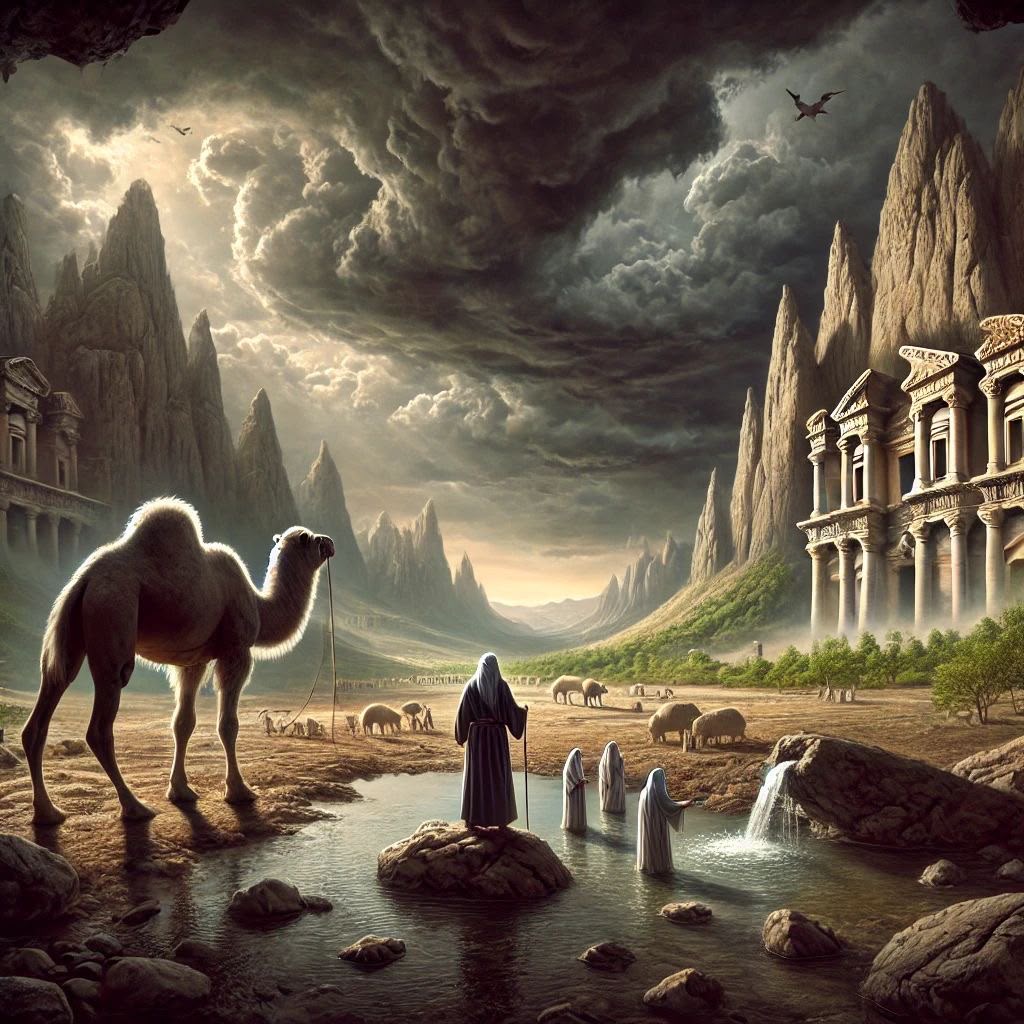
The story of Prophet Salih (AS) and the people of Thamud is one of the clearest examples of this reality. Allah granted them a miracle unlike any they had ever seen a she-camel that emerged by His command as a sign of His power. Instead of accepting this undeniable evidence, many among them chose defiance. Their rejection was not due to a lack of proof but because they refused to submit to Allah.
Their story serves as a reminder that guidance begins with humility. Miracles may strengthen faith, but they cannot benefit hearts that have already chosen arrogance.
Who Were the People of Thamud?
The people of Thamud lived after the destruction of the nation of ‘Ad. They settled in a region known for its mountains, where they displayed remarkable engineering skills by carving homes directly into the rock.
Allah refers to this achievement in the Qur’an:
“And you carve houses out of the mountains with skill.”
(Qur’an 26:149)
These rock-cut dwellings reflected the prosperity and technical ability of the people of Thamud. Their settlements were secure, well-constructed, and admired for their architectural excellence.
Like many prosperous nations before them, however, material success gradually led them away from gratitude. They turned to idol worship and ignored the guidance of Allah.
It was at this stage that Allah sent Prophet Salih (AS), a man from among their own people.
Prophet Salih’s Message
Salih (AS) delivered the same message brought by every prophet.
He said:
“O my people, worship Allah. You have no deity other than Him.”
(Qur’an 7:73)
He reminded them that Allah had blessed them with fertile land, secure homes, and abundant resources.
Rather than becoming arrogant because of these blessings, they should have shown gratitude and worshipped the One who had provided everything they possessed.
Salih (AS) did not ask for wealth or political authority. He sought only to guide his people towards success in this world and the Hereafter.
The Demand for a Miracle
Instead of accepting his message, many of the leaders challenged Salih (AS).
They demanded a miracle that would prove he was truly a messenger of Allah.
Allah answered their demand by granting them an extraordinary sign.
From a solid rock emerged a magnificent she-camel by the command of Allah.
This was not an ordinary animal. It was a miracle specifically created as evidence of Salih’s prophethood.
The Qur’an refers to it as:
“This is the she-camel of Allah as a sign for you.”
(Qur’an 7:73)
The miracle left no room for doubt.
The challenge the people had issued was answered directly by Allah.
The Conditions Attached to the Miracle
The miracle came with clear instructions.
The she-camel was to graze freely without being harmed.
She was also given designated access to the community’s water source, sharing it with the people according to Allah’s command.
Salih (AS) warned them:
“Leave her to eat in Allah’s land and do not touch her with harm, lest a painful punishment seize you.”
(Qur’an 7:73)
This was a simple test.
Would they respect the command of Allah after witnessing such a remarkable sign?
Or would they continue acting according to their pride and selfish desires?
The Arrogance of the Leaders
Although some members of the community believed in Salih (AS), many influential leaders refused.
Their rejection was not based on lack of evidence.
Instead, they feared losing their authority and influence.
Throughout the Qur’an, opposition to the prophets frequently comes from those whose worldly interests are threatened by the truth.
Rather than encouraging people to reflect upon the miracle, they sought ways to undermine Salih (AS) and silence his message.
Their pride became stronger than their willingness to accept what they knew was true.
Killing the She-Camel
Eventually, a group of rebellious men plotted to kill the she-camel despite Allah’s clear warning.
The Qur’an states:
“But they hamstrung her and became regretful.”
(Qur’an 26:157)
Although only a few individuals physically carried out the act, the Qur’an attributes the crime to the entire community because the majority approved of it or remained silent.
This teaches an important principle.
When wrongdoing is openly accepted by society, responsibility extends beyond those who commit it directly.
Remaining silent in the face of deliberate injustice can carry serious consequences.
The Final Warning
After the she-camel was killed, Salih (AS) informed his people that they had only three days remaining before Allah’s punishment would arrive.
Despite this final opportunity to repent, they continued their rebellion.
Some even plotted to assassinate Salih (AS) himself.
Rather than reflecting upon their actions, they became even more determined to oppose Allah’s messenger.
Their behaviour demonstrates how persistent arrogance can blind people from recognising repeated opportunities for repentance.
The Punishment of Thamud
At the appointed time, Allah’s punishment descended upon the people of Thamud.
The Qur’an describes a mighty blast accompanied by a violent earthquake.
Allah says:
“So the earthquake seized them, and they became motionless bodies in their homes.”
(Qur’an 7:78)
Their magnificent homes carved into mountains offered no protection.
Their wealth could not save them.
Their influence disappeared instantly.
Only Salih (AS) and the believers who followed him were spared.
The destruction of Thamud became another lasting reminder that no society can escape accountability before Allah.
Why Their Story Matters Today
The account of Thamud remains relevant because it highlights attitudes that continue to appear in every generation.
Many people claim they would believe if only they witnessed a miracle.
Yet history shows that miracles alone do not transform hearts.
Faith requires humility, sincerity, and willingness to submit to the truth.
The story also demonstrates the danger of allowing influential individuals to lead society away from righteousness.
Communities often decline when leaders place personal interests above moral responsibility.
Finally, the story reminds believers that Allah’s commands should never be treated lightly.
Obedience is not based on whether we fully understand every wisdom behind a command.
It is based on trust in the One who issued it.
Lessons from the Story of Prophet Salih (AS)
The story of Salih (AS) teaches that miracles strengthen sincere believers but do not benefit those whose hearts are hardened by arrogance.
Material progress and impressive achievements do not guarantee moral success.
Leadership carries responsibility, and those in positions of influence should guide people towards righteousness rather than away from it.
Communities share responsibility when injustice becomes publicly accepted.
Most importantly, Allah always gives people opportunities to repent before punishment arrives, demonstrating His justice and mercy.
Conclusion
The story of Prophet Salih (AS) is not merely about a miraculous she-camel or the destruction of an ancient civilization. It is about how people respond when confronted with clear evidence of the truth.
The people of Thamud possessed intelligence, wealth, engineering expertise, and a remarkable miracle before their very eyes. Yet none of these advantages benefited them because they allowed pride to overcome faith.
For Muslims today, this story serves as a reminder that true guidance depends upon humility, obedience, and gratitude to Allah. Knowledge, success, and material progress are blessings only when they strengthen faith and encourage righteous living.
The Qur’an preserves the story of Salih (AS) so that every generation understands that the greatest miracle is not simply witnessing extraordinary events but responding to Allah’s guidance with sincerity and submission.
Key Lessons from the Story
- Every prophet called people to worship Allah alone.
- Miracles benefit only those who sincerely seek the truth.
- Arrogance can prevent people from accepting even the clearest evidence.
- Communities share responsibility when wrongdoing becomes accepted.
- Allah grants opportunities for repentance before punishment.
- Material success is never a substitute for faith and obedience.
Coming Next in the Series
THE STORY OF PROPHET IBRAHIM (AS): THE MAN WHO CHALLENGED IDOLATRY
Travel with 3SixtyIslam
When it comes to Hajj and Umrah, experience and trust matter. 3SixtyIslam provides reliable packages, proper guidance, and full support from departure to return. We handle the journey so you can focus on your ibadah. Choose a travel partner that understands the responsibility of serving the guests of Allah.
Follow @3SixtyIslam for trusted Hajj and Umrah guidance, authentic Islamic knowledge, inspiring Muslim news, and practical lessons for everyday Muslim living.
