


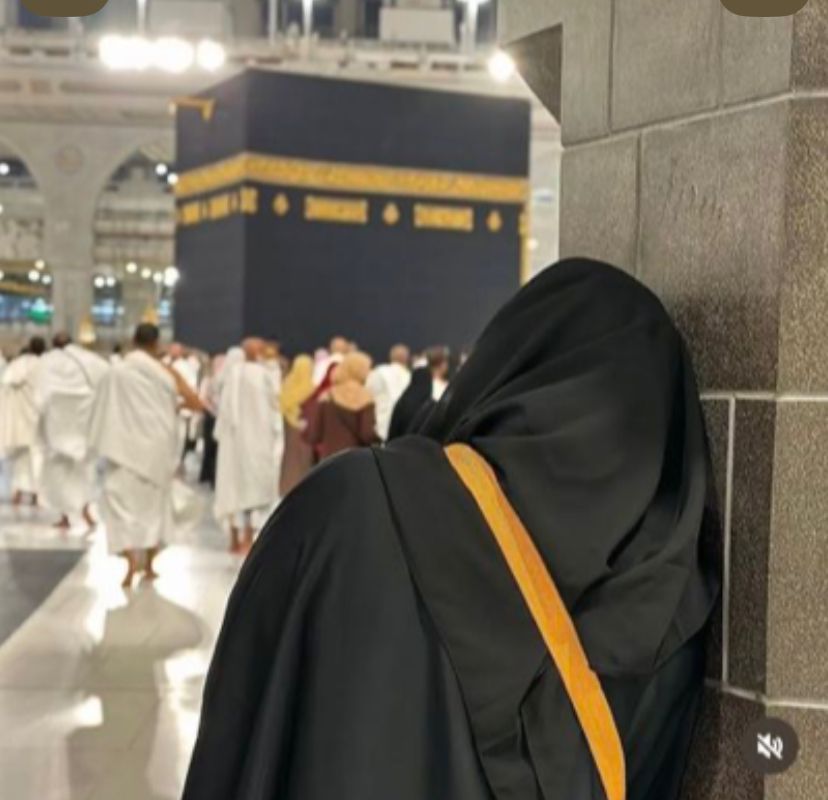
Menstruation is a natural part of a woman’s life, but for Muslim women preparing for Hajj or Umrah, it can raiseimportant questions and concerns. What happens if your menstrual period begins just before travelling to Makkah? Canyou enter Ihram while menstruating? Can you visit Masjid al-Haram? Are you allowed to make Du’a, recite the Qur’anor perform other acts of worship?
These are questions many Muslim women ask, particularly those performing Hajj or Umrah for the first time.
For some women, menstruation may begin unexpectedly during the pilgrimage. For others, their menstrual cycle maycoincide with the days of Hajj or the dates of their planned Umrah journey.
Although menstruation prevents women from performing certain acts of worship, it does not mean that they areexcluded from the spiritual benefits of Hajj and Umrah. There are specific Islamic guidelines that explain what womencan and cannot do during this period.
Understanding these rulings before travelling can help women prepare properly, avoid unnecessary anxiety and makeinformed decisions throughout their pilgrimage.
In this guide, we explore the Islamic rulings concerning menstruation during Hajj and Umrah, the activities women canperform, what happens when menstruation begins during Tawaf, and how to manage the situation while travelling.
WHAT DOES ISLAM SAY ABOUT MENSTRUATION DURING HAJJ AND UMRAH?
Menstruation, known as Hayd in Arabic, is a natural biological process experienced by women. Islam recognises it andprovides specific exemptions and guidelines concerning worship during this period.
A menstruating woman is not considered sinful, impure in character or spiritually distant from Allah. Menstruation is anatural condition, and the restrictions associated with it are matters of Islamic law rather than personal shortcomings.
During menstruation, women are exempt from performing Salah and fasting. They are also not permitted to performTawaf around the Ka’bah while menstruating, according to the established mainstream scholarly ruling.
However, they can continue engaging in many other acts of worship, including:
-
Making Du’a and asking Allah for forgiveness.
-
Performing Dhikr and remembering Allah.
-
Reciting Talbiyah during Hajj or Umrah.
-
Giving charity and helping other pilgrims.
-
Listening to Qur’an recitation.
-
Seeking Islamic knowledge.
-
Sending blessings upon Prophet Muhammad (peace and blessings be upon him).
The important thing is to understand that menstruation does not cancel a woman’s intention to worship Allah orautomatically invalidate her Hajj.
CAN A WOMAN ENTER IHRAM WHILE MENSTRUATING?
Yes. A woman can enter the state of Ihram while menstruating.
This is one of the most important things every Muslim woman should understand before travelling for Hajj or Umrah.
Menstruation does not prevent a woman from making the intention to perform Hajj or Umrah. She can wear herappropriate clothing, make her intention and begin reciting the Talbiyah as required.
The Prophet Muhammad (peace and blessings be upon him) gave this guidance to his wife, Aisha (RA), when shebegan menstruating during the journey for Hajj.
In an authentic narration recorded in Sahih al-Bukhari and Sahih Muslim, Aisha (RA) explained that she beganmenstruating while travelling for Hajj.
The Prophet (PBUH) comforted her and explained that menstruation was something Allah had decreed for thedaughters of Adam.
He instructed her to perform the rites of Hajj, except Tawaf around the Ka’bah until she became pure.
This incident provides an important lesson: menstruation does not prevent a woman from entering Ihram or undertakingthe other rites of Hajj.
What should a woman do if her period begins before reaching the Miqat?
She should still enter Ihram at the appropriate Miqat, make her intention and recite the Talbiyah.
She does not need to wait until her period ends before entering Ihram.
She should observe the restrictions of Ihram and wait until she becomes pure before performing Tawaf.
CAN A WOMAN PERFORM TAWAF WHILE MENSTRUATING?
No. According to the established majority scholarly ruling, a menstruating woman must not perform Tawaf around theKa’bah until her menstruation ends and she has performed Ghusl.
Tawaf is one of the essential rites of Umrah and an important rite of Hajj. It requires ritual purity according to themajority of Islamic scholars.
This is why women who begin menstruating before performing Tawaf must wait until they become pure.
The instruction given by Prophet Muhammad (PBUH) to Aisha (RA) provides the basis for this ruling.
However, women should understand that not every Hajj activity requires the same level of ritual purity.
For example, a menstruating woman can stand at Arafah, spend the night in Muzdalifah and participate in otherprescribed activities of Hajj.
The restriction on Tawaf should therefore not be confused with a prohibition against participating in the entirepilgrimage.
WHAT IF YOUR PERIOD STARTS DURING UMRAH?
This is a situation that can be particularly stressful for women who have travelled a long distance and have limited timein Makkah.
Imagine arriving in Makkah, entering Ihram, performing the first part of Umrah and then discovering that yourmenstrual period has started.
What should you do?
The answer depends on the stage of Umrah you have reached.
1. If menstruation begins before Tawaf
If your period starts after entering Ihram but before beginning Tawaf, you should not perform Tawaf.
Remain in Ihram and wait until your menstruation ends.
After your period has finished, perform Ghusl and complete the Umrah rites.
2. If menstruation begins during Tawaf
If menstruation begins while performing Tawaf, you should stop performing Tawaf.
Do not continue circling the Ka’bah while menstruating.
You should seek guidance from a qualified scholar or your Hajj and Umrah group leader about how to resume andcomplete the Tawaf when you become pure.
3. If menstruation begins after completing Tawaf but before Sa’i
This situation is different.
According to the majority scholarly position, ritual purity is required for Tawaf but is not a condition for Sa’i betweenSafa and Marwah.
Therefore, if a woman completes her Tawaf while in a state of purity and menstruation begins afterwards, she mayperform Sa’i.
She should also complete the remaining rites of Umrah, including cutting a portion of her hair, according to theapplicable rules.
4. If menstruation begins after completing Tawaf and Sa’i
If a woman completes both Tawaf and Sa’i before her period begins, she can complete the remaining Umrah rite ofcutting or trimming her hair.
She does not need to wait until her menstruation ends simply because it began after these rites were completed.
Once she completes the required rites, she exits Ihram.
MENSTRUATION DURING HAJJ: WHAT EVERY WOMAN SHOULD KNOW
Unlike Umrah, Hajj involves several rites performed over a number of days. Fortunately, menstruation does not preventa woman from participating in most of these activities.
A menstruating woman can continue with several important Hajj rites while waiting for her period to end.
1. Can a menstruating woman travel to Mina?
Yes. A woman can travel to Mina, stay in her tent, perform Dhikr, make Du’a and participate in the prescribed activities.
She does not need to leave Mina because of menstruation.
2. Can a menstruating woman stand at Arafah?
Yes. This is particularly important.
Standing at Arafah is the central pillar of Hajj, and menstruation does not prevent a woman from fulfilling thisobligation.
She can:
-
Stand at Arafah and engage in Du’a.
-
Recite the Talbiyah.
-
Remember Allah through Dhikr.
-
Seek forgiveness.
-
Listen to Qur’an recitation.
-
Pray for herself, her family and the Muslim Ummah.
A menstruating woman should not feel that her Hajj is incomplete simply because she cannot perform Salah during thisperiod.
3. Can a menstruating woman spend the night in Muzdalifah?
Yes. Menstruation does not prevent a woman from travelling to Muzdalifah or spending the night there.
She can continue remembering Allah, making Du’a and preparing for the next stage of Hajj.
She is not required to perform Salah while menstruating.
4. Can a menstruating woman stone the Jamarat?
Yes. A menstruating woman can perform the stoning ritual at Mina.
The stoning of the Jamarat does not require the ritual purity required for Salah and Tawaf.
She should follow the official Hajj schedule and safety instructions when performing this rite.
5. Can a menstruating woman perform Tawaf al-Ifadah?
Tawaf al-Ifadah is one of the essential rites of Hajj. A menstruating woman must wait until her menstruation ends,perform Ghusl and then complete this Tawaf.
This is particularly important because Tawaf al-Ifadah cannot simply be omitted.
If her period continues and she is scheduled to leave Makkah, she should immediately consult a qualified scholar andher Hajj group leader about the appropriate arrangements.
There are scholarly discussions and exceptional rulings concerning women who cannot remain in Makkah until theybecome pure. These situations require individual guidance.
6. Can a menstruating woman perform the Farewell Tawaf?
The Farewell Tawaf, known as Tawaf al-Wada, is the final circumambulation performed before leaving Makkah.
However, menstruating women are exempt from performing it.
This exemption is established in an authentic narration concerning Safiyyah (RA).
When the Prophet Muhammad (PBUH) was informed that Safiyyah (RA) had completed Tawaf al-Ifadah but hadstarted menstruating, he explained that she could proceed with the departure arrangements.
This demonstrates that a menstruating woman who has completed Tawaf al-Ifadah does not need to delay her departurefrom Makkah solely to perform the Farewell Tawaf.
CAN A MENSTRUATING WOMAN VISIT MASJID AL-HARAM?
This is another common question among Muslim women visiting Makkah.
The majority of Islamic scholars hold that a menstruating woman should not remain inside a mosque, including Masjidal-Haram.
There are scholarly discussions concerning the circumstances in which a woman may pass through a mosque withoutstaying there, as well as contemporary discussions about mosque access and facilities.
A woman should therefore follow reliable scholarly guidance and the applicable mosque regulations.
Importantly, being unable to enter the mosque does not prevent her from making Du’a, remembering Allah or engagingin other forms of worship.
CAN A MENSTRUATING WOMAN RECITE THE QUR’AN?
There are differences of opinion among Islamic scholars concerning Qur’an recitation by menstruating women.
Some scholars prohibit recitation from memory during menstruation, while others permit it, particularly where there isa need for learning, teaching or fear of forgetting what has been memorised.
There are also differences concerning touching the physical Mushaf.
A woman should follow the scholarly position she trusts.
However, she can listen to Qur’an recitation, make Du’a, engage in Dhikr and recite established supplications.
She should not assume that menstruation means she must stop all forms of remembrance and worship.
CAN A WOMAN FAST DURING MENSTRUATION WHILEPERFORMING HAJJ?
No. A menstruating woman must not fast.
If her period begins while she is fasting, the fast is invalidated, and she must make up the obligatory fast afterwards.
However, fasting is not a requirement for completing Hajj.
Women performing Hajj should concentrate on fulfilling the prescribed rites and maintaining their health throughout thepilgrimage.
WHAT IF YOUR MENSTRUAL PERIOD DOES NOT END BEFOREYOUR FLIGHT HOME?
This is one of the most difficult situations a woman may encounter during Hajj or Umrah.
Imagine that your period begins shortly before your scheduled return flight. You have completed most of yourpilgrimage, but you have not yet performed Tawaf al-Ifadah or another required Tawaf.
What should you do?
First, do not panic.
Inform your Hajj group leader or Umrah operator immediately and explain your situation.
If you are performing Hajj, remember that Tawaf al-Ifadah is an essential rite and must be addressed before yourpilgrimage can be considered complete.
Depending on your circumstances, you may need to delay your departure until you become pure and can perform theTawaf.
If this is genuinely impossible, seek an individual ruling from a qualified scholar familiar with the relevant schools ofIslamic jurisprudence.
Some exceptional circumstances have been discussed by scholars, including the rulings applicable to women whocannot remain in Makkah.
Do not rely on general advice from fellow pilgrims or social media when dealing with such an important matter.
CAN WOMEN TAKE MEDICATION TO DELAY MENSTRUATIONDURING HAJJ OR UMRAH?
Some Muslim women consider using medication to delay their menstrual periods so that they can complete theirpilgrimage without interruption.
Islam does not generally prohibit a woman from using medically suitable methods to manage her menstrual cycle.
However, there are important considerations.
Before taking medication to delay menstruation:
-
Consult a qualified healthcare professional.
-
Discuss possible side effects and medical risks.
-
Do not take medication simply because another pilgrim recommends it.
-
Follow the prescribed dosage and instructions.
-
Consider your medical history and any existing health conditions.
Hormonal medication can affect women differently. It may also cause unexpected spotting or irregular bleeding.
A woman who experiences unusual bleeding should seek medical advice and consult a qualified Islamic scholar todetermine whether the bleeding is menstruation or another type of bleeding.
Most importantly, women should understand that menstruation is not a failure or an obstacle to earning Allah’s reward.
WHAT IS ISTIHADAH, AND HOW IS IT DIFFERENT FROM MENSTRUATION?
Another important issue for women performing Hajj and Umrah is understanding the difference between Hayd andIstihadah.
Hayd refers to menstrual bleeding, which carries specific restrictions concerning worship.
Istihadah refers to abnormal or irregular vaginal bleeding that is not classified as menstruation.
A woman experiencing Istihadah is not treated in the same way as a menstruating woman.
Generally, a woman with Istihadah can perform Salah, fast and perform Tawaf, subject to the relevant purificationrequirements.
The detailed rulings concerning irregular bleeding differ depending on the circumstances, including the woman’s usualmenstrual pattern and the characteristics and duration of the bleeding.
This distinction is particularly important during Hajj and Umrah because not every episode of bleeding automaticallymeans that a woman must stop performing Tawaf or Salah.
Women experiencing irregular bleeding should seek guidance from a knowledgeable scholar and healthcareprofessional.
PRACTICAL TIPS FOR WOMEN PREPARING FOR HAJJ AND UMRAH
Preparation can make a significant difference, especially for women whose menstrual cycles may coincide with theirpilgrimage.
Here are some practical suggestions:
1. Understand your menstrual cycle
Before travelling, familiarise yourself with your usual menstrual pattern. This can help you anticipate when your periodmay occur.
2. Pack sufficient sanitary products
Carry enough sanitary pads, liners and other personal hygiene products for your journey.
Although these items are available in Saudi Arabia, having your preferred products readily available can maketravelling easier.
3. Consult your doctor before travelling
If you have concerns about your menstrual cycle or wish to delay your period, speak with a healthcare professionalbefore departure.
4. Learn the relevant Islamic rulings
Do not wait until your period begins before learning what you can and cannot do.
Understanding the rules beforehand can prevent confusion and unnecessary anxiety.
5. Keep your Hajj or Umrah leader informed
If menstruation affects your pilgrimage schedule, communicate with your group leader so that appropriate arrangementscan be made.
6. Maintain your spiritual routine
Even when menstruating, continue making Du’a, engaging in Dhikr, giving charity and performing other permissibleacts of worship.
7. Avoid comparing your experience with other women
Every woman’s menstrual cycle is different. Some women may complete their pilgrimage without experiencingmenstruation, while others may need to adjust their plans.
Remember that Allah knows your circumstances and intentions.
FREQUENTLY ASKED QUESTIONS ABOUT MENSTRUATION DURING HAJJ AND UMRAH
Can I enter Ihram if I am on my period?
Yes. Menstruation does not prevent a woman from entering Ihram. She can make her intention and recite the Talbiyahat the appropriate Miqat.
Can I perform Umrah while menstruating?
You can enter Ihram and perform permissible activities, but you must wait until menstruation ends before performingTawaf.
Can I make Du’a while menstruating?
Yes. Women can make Du’a at any time during menstruation.
Can I recite the Talbiyah while menstruating?
Yes. Reciting the Talbiyah is permitted.
Can I visit Arafah while menstruating?
Yes. Menstruation does not prevent a woman from standing at Arafah, which is an essential pillar of Hajj.
Can I stone the Jamarat while menstruating?
Yes. Menstruation does not prevent a woman from performing the stoning ritual.
Can I perform Sa’i while menstruating?
According to the majority scholarly position, ritual purity is not a condition for Sa’i. However, a woman must observethe requirement of purity for Tawaf.
Can I perform the Farewell Tawaf while menstruating?
No. A menstruating woman is exempt from the Farewell Tawaf.
Does menstruation invalidate Hajj?
No. Menstruation does not invalidate Hajj. However, a woman must complete the essential rites that require ritualpurity, particularly Tawaf al-Ifadah.
Can I take medication to delay my period during Hajj?
A woman may consider this after consulting a qualified healthcare professional. She should also understand thatmedication may cause irregular bleeding.
FINAL THOUGHTS: MENSTRUATION DOES NOT TAKE AWAY A WOMAN’S OPPORTUNITY TO WORSHIP ALLAH
Menstruation during Hajj or Umrah can be challenging, especially for women who have spent months or yearspreparing for the sacred journey.
However, it is important to remember that menstruation is natural and recognised in Islam. It does not make a womanless deserving of Allah’s mercy, nor does it prevent her from participating in most of the rites of Hajj.
From entering Ihram and standing at Arafah to spending the night in Muzdalifah and performing the stoning ritual atMina, menstruating women can still fulfil many important aspects of their pilgrimage.
The key is understanding which acts of worship require ritual purity and which can be performed during menstruation.
With proper preparation, reliable Islamic guidance and patience, women can approach Hajj and Umrah with greaterconfidence and peace of mind.
May Allah make Hajj and Umrah easy for every Muslim woman, accept the worship of all pilgrims, grant them goodhealth and allow them to return home with their sins forgiven.
Ameen.
