


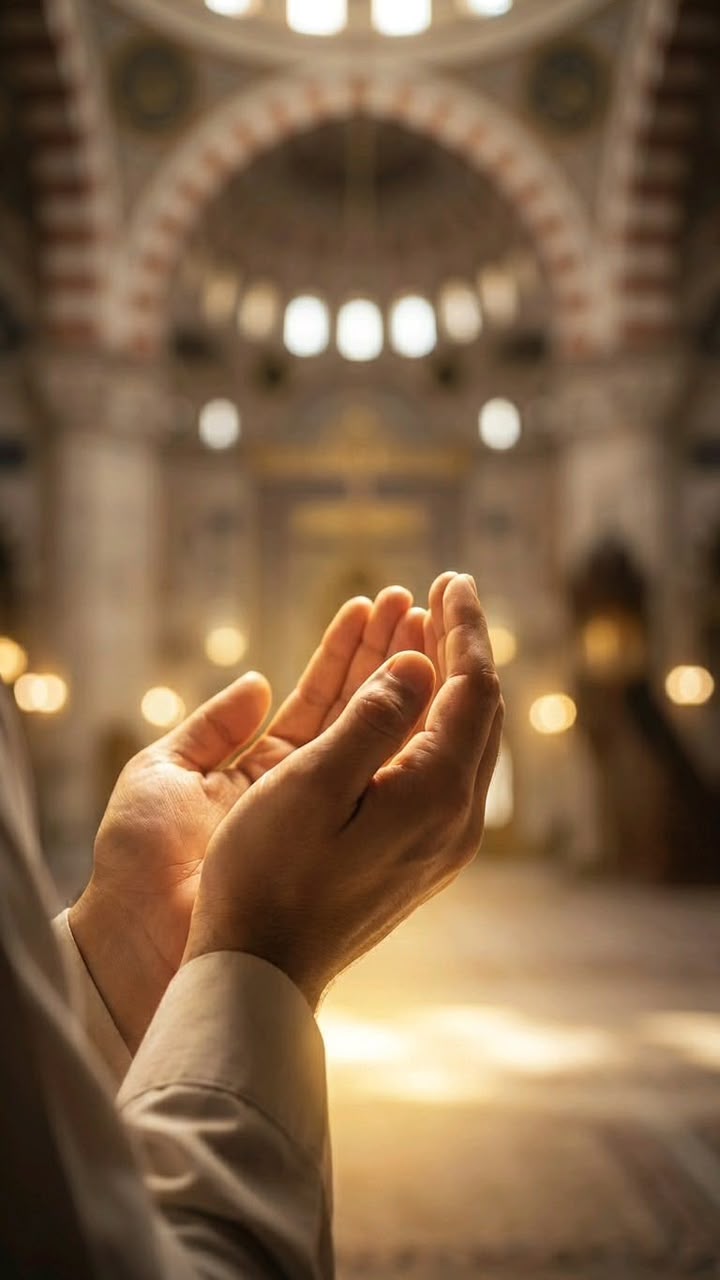
There is a question we may need to ask ourselves in the quietest moments of our lives:
If Allah took away everything we have been asking Him for, would we still love Him the same way?
If the things we prayed for never came, if the doors we begged Him to open remained closed, if the person we made du’a for never became part of our lives, and if the future we imagined never unfolded the way we hoped, would our hearts still turn to Allah with love?
Or would our love begin to fade because we no longer received what we wanted?
It is a difficult question, not because we do not love Allah, but because it invites us to examine the nature of our love. It asks us to look beyond the things we receive from Him and consider whether we love Him for who He is.
Sometimes, without even realizing it, we begin to measure our relationship with Allah by the outcomes of our prayers. When life is beautiful, we feel close to Him. When our du’as are answered, our hearts overflow with gratitude. When things fall into place, we see His mercy everywhere.
But when life becomes painful, when our prayers seem unanswered, and when we lose the very things we begged Allah to preserve, something inside us begins to struggle.
We start asking questions.
Ya Allah, why me? Why did You allow this to happen? Why did You not give me what I asked for?
These questions may come from a heart that is hurting, not necessarily from a heart that has stopped believing. Allah knows our weaknesses, our fears, and the tears we cannot explain to anyone else.
But perhaps such moments also reveal something important about our relationship with Him: Have we become more attached to the blessings of Allah than to Allah Himself?
1. DO WE LOVE THE GIVER, OR ONLY THE GIFTS?
Imagine someone who is always kind to you, always gives you what you want, and always makes your life easier. Naturally, you may feel grateful to that person.
But what happens when they can no longer give you what you desire?
Would your appreciation remain? Would you still value their presence, their character, and everything they mean to you? Or would the relationship lose its importance because the benefits had disappeared?
Now, consider our relationship with Allah.
We ask Him for wealth, good health, marriage, children, success, protection, peace of mind, and countless other blessings. There is nothing wrong with asking Allah for these things. In fact, Islam teaches us to turn to Him with our needs, both great and small.
But Allah is not merely the One we turn to when we need something.
He is our Creator. He is the One who gave us life before we could ask for it. He sustained us before we understood what provision meant. He showed us mercy before we knew how to make du’a. He gave us countless blessings that we have never even thought to request.
Think about your breathing, your ability to see, the food you eat, the moments you laugh, and the opportunities you have been given to repent and begin again.
How many blessings have you enjoyed today without mentioning them in a single du’a?
Allah says in the Qur’an:
“And if you should count the favors of Allah, you could not enumerate them.” — Qur’an 16:18.
This verse reminds us that the blessings of Allah are beyond our ability to calculate.
Perhaps we have been so focused on the one thing we do not have that we have forgotten the countless things Allah has already given us.
Loving Allah means being grateful for His blessings, but it also means recognizing that our relationship with Him is deeper than a list of answered prayers.
2. WHAT HAPPENS WHEN ALLAH DOES NOT GIVE US WHAT WE WANT?
One of the greatest tests of faith is learning how to remain connected to Allah when life does not make sense.
It is easy to say, “I trust Allah,” when everything is going according to plan. It is more difficult to hold on to that trust when the plan falls apart.
It is easy to praise Allah when the answer to our du’a brings us happiness. It is more difficult when the answer is different from what we imagined.
Sometimes, we pray for a particular person because we believe they will bring happiness into our lives. We ask Allah to make a particular opportunity ours because we believe it will solve our problems. We beg for a specific future because we cannot imagine being happy without it.
And when we do not receive what we desire, we may begin to question whether Allah has heard us.
But our inability to understand what is happening does not mean that Allah has abandoned us.
Allah says:
“But perhaps you hate a thing and it is good for you; and perhaps you love a thing and it is bad for you. And Allah knows, while you know not.” — Qur’an 2:216.
This verse does not mean that every painful experience will become easy to understand or that every disappointment will eventually turn into the outcome we wanted. Rather, it reminds us that our knowledge is limited, while Allah’s knowledge is complete.
We see a moment. Allah knows what we cannot see.
We see what we desire. Allah knows the full reality of what we desire.
We see the door that has closed. We do not know everything that lies beyond it.
Sometimes, the thing we wanted may truly have been good for us, but the timing was different from what we expected. Sometimes, we may never fully understand why a particular door closed. In such moments, faith invites us to continue trusting Allah without pretending that the pain does not exist.
You can be disappointed and still trust Allah.
You can cry while making du’a and still have faith.
You can wish things had turned out differently without accusing Allah of being unkind to you.
The strength of your faith is not measured by how little you hurt. Sometimes, it is revealed in how you continue turning to Allah while you hurt.
3. LOVING ALLAH DOES NOT MEAN WE NEVER ASK HIM FOR ANYTHING
It is important to understand that asking Allah for blessings does not make our love for Him insincere.
We are human beings with needs. We experience fear, loneliness, uncertainty, illness, financial difficulties, and the desire for companionship. Allah knows every one of these needs.
The Qur’an teaches us to call upon Him, and the Prophet Muhammad ﷺ taught us to make du’a.
Therefore, the question is not whether we should ask Allah for what we desire. We should.
The question is whether our love for Allah depends entirely on whether we receive it.
There is a difference between saying, “Ya Allah, I want this, and I hope You grant it to me,” and saying, “Ya Allah, if You do not grant this, I no longer know how to love You.”
The first is a request made by a hopeful servant. The second reveals how easily a particular desire can become more important to us than our relationship with our Lord.
We must be careful not to turn worship into a transaction in which we offer prayers only because we expect a particular reward in this worldly life.
We pray because Allah deserves our worship. We make du’a because He is our Lord and we are dependent upon Him. We seek forgiveness because we need His mercy. We obey Him because He is worthy of our obedience.
And we hope for His reward because He has promised it.
These things are not contradictions. A Muslim can love Allah, fear displeasing Him, hope for His mercy, and long for the blessings of this life and the next.
The goal is not to stop desiring blessings. It is to ensure that our desires do not become the foundation of our faith.
4. WOULD WE STILL WORSHIP ALLAH IF OUR LIVES REMAINED DIFFICULT?
This question deserves honest reflection.
Would we still pray if the problem we have been asking Allah to solve remained?
Would we still read the Qur’an if our sadness did not immediately disappear?
Would we still make du’a if the person we loved never returned?
Would we still give charity if we were not rewarded with visible improvements in our circumstances?
Would we still remember Allah if our lives did not look the way we had imagined?
These are not questions meant to make us feel guilty for struggling. They are invitations to examine what sustains our worship.
Sometimes, we approach Allah because we are desperate for relief. There is nothing shameful about that. A person who turns to Allah in distress is doing something beautiful by seeking refuge in the One who can hear every whisper.
But as our relationship with Allah grows, we begin to understand that He is not only the One we seek when we need rescue. He is also the One we worship when we are comfortable, the One we remember when we are grateful, and the One we trust when the future is uncertain.
Consider the example of Prophet Ayyub (AS), whose story is associated with extraordinary patience during severe hardship.
The Qur’an tells us that he called upon his Lord:
“Indeed, adversity has touched me, and you are the Most Merciful of the merciful.” — Qur’an 21:83.
Notice the tenderness of this supplication.
Prophet Ayyub (AS) acknowledged his suffering while turning to Allah’s mercy. His pain did not prevent him from calling upon his Lord.
That is an important lesson for us.
Our difficulties do not have to disappear before we can maintain a relationship with Allah. We do not have to pretend that everything is fine before we can worship Him sincerely.
Sometimes, the most honest prayer we can make is simply:
“Ya Allah, I do not understand what is happening in my life, but I still need You. Please help me, guide me, and do not let my hardship distance me from You.”
5. THE DANGER OF LOVING THE BLESSINGS MORE THAN THE ONE WHO GIVES THEM
There is a subtle danger in becoming so attached to our blessings that we forget their Source.
We may begin to believe that our happiness depends entirely on having a particular person in our lives, earning a certain amount of money, achieving a particular goal, or reaching a particular stage of life.
Gradually, our hearts become attached to the blessing itself.
We may even begin to believe that life cannot be meaningful without it.
But every worldly blessing is temporary. People change. Circumstances change. Health can change. Wealth can disappear. Plans can fail. Even the things we treasure most in this world are not guaranteed to remain with us forever.
If our entire sense of peace depends on something temporary, what happens when that thing changes?
This is why our hearts need a foundation deeper than worldly circumstances.
Allah says:
“Unquestionably, by the remembrance of Allah hearts are assured.” — Qur’an 13:28.
This does not mean that remembering Allah will instantly remove every feeling of sadness or anxiety. It means that our relationship with Him gives our hearts a source of remembrance, hope, and spiritual grounding that is not dependent on everything in our lives going according to plan.
We can appreciate our blessings without worshipping them.
We can love people without making them the centre of our existence.
We can pursue success without allowing it to determine our worth.
We can pray for a beautiful future while remembering that our ultimate hope is with Allah.
The blessings of this world are gifts to appreciate, not replacements for the One who gives them.
6. CAN WE LOVE ALLAH WHILE FEELING DISAPPOINTED WITH OUR LIVES?
Yes, we can experience pain, confusion, and disappointment while still seeking Allah.
Sometimes, people assume that a strong Muslim should never struggle with difficult emotions. They believe that if they truly trusted Allah, they would never cry over a disappointment or feel troubled by an unanswered prayer.
But being human means experiencing emotions.
The important question is what we do with those emotions.
Do we allow our pain to lead us away from Allah, or do we bring that pain to Him?
Do we allow disappointment to destroy our hope, or do we continue asking for guidance?
Do we become bitter toward everyone, or do we seek the strength to heal?
A person may struggle to understand Allah’s decree while still choosing to worship Him. A person may feel heartbroken while continuing to believe in His mercy. A person may need time, support, and sincere reflection to find peace again.
Faith does not require us to deny our emotions. It calls us to respond to them in ways that preserve our relationship with Allah.
When you feel disappointed, speak to Allah in your du’a. Tell Him what hurts. Ask Him to strengthen your heart. Seek counsel from trustworthy people when you need it. Take the practical steps available to you.
And remember that you do not have to understand every detail of your life before you can continue worshipping your Lord.
Sometimes, faith means walking forward with questions that have not yet been answered.
7. HOW DO WE LEARN TO LOVE ALLAH FOR WHO HE IS?
Loving Allah more deeply is not something we achieve through one emotional moment. It grows through knowledge, worship, gratitude, reflection, and consistent effort.
Here are a few ways to nurture that love.
First, learn about Allah through His names and attributes.
Reflect on His mercy, wisdom, forgiveness, justice, and generosity as taught in the Qur’an and authentic Sunnah. The more we learn about our Lord, the more meaningful our worship can become.
Second, practise gratitude for blessings you have stopped noticing.
Instead of focusing only on what is missing, take time to recognize the blessings that surround you. Thank Allah for what you have, even while asking Him for what you need.
Third, worship Allah even when your emotions are not at their strongest.
There will be days when prayer feels deeply moving and days when you struggle to concentrate. Continue striving to worship Allah sincerely. Do not make your entire relationship with Him dependent on how you feel at a particular moment.
Fourth, make du’a for a heart that loves Allah.
Ask Allah to increase your faith, purify your intentions, strengthen your trust in Him, and make obedience beloved to you.
Fifth, reflect on your intentions.
Ask yourself why you are doing a particular good deed. Is it only for recognition? Is it only because you want a specific worldly outcome? Or are you seeking Allah’s pleasure?
Do not let this reflection become a reason to despair over every imperfect intention. Instead, use it as an opportunity to renew your sincerity.
Finally, remember that loving Allah does not mean abandoning hope for a better life.
You can ask for marriage, children, wealth, health, success, and happiness. You can work toward your goals and make plans for your future.
Just remember that none of these blessings should become the condition upon which your love for Allah depends.
8. WHAT IF ALLAH NEVER GIVES US THE THING WE HAVE BEEN PRAYING FOR?
This may be the hardest question of all.
What if the marriage never happens?
What if the opportunity never comes?
What if the person never returns?
What if the life we imagined never becomes our reality?
We must be careful not to make promises about the future that Allah has not made to us. We cannot guarantee that every worldly desire will eventually be fulfilled in a different form, nor can we claim to know the specific wisdom behind every disappointment.
But we can hold on to what Allah has taught us.
We can continue to ask Him for what is good. We can seek His guidance when making decisions. We can take practical steps to improve our circumstances. We can grieve what we have lost without allowing grief to consume our entire lives.
And we can remember that the worth of our relationship with Allah is not determined by whether every worldly dream comes true.
Our lives are bigger than one disappointment.
Our purpose is bigger than one relationship.
Our future in the Hereafter matters more than any single worldly achievement.
Allah says:
“And whoever relies upon Allah — then He is sufficient for him.” — Qur’an 65:3.
Trusting Allah does not mean knowing exactly how everything will turn out. It means continuing to rely on Him while doing what we can, accepting that our knowledge has limits, and seeking His guidance through every stage of life.
Perhaps the deepest expression of trust is not saying, “I know Allah will give me exactly what I want.”
Perhaps it is saying, “Ya Allah, I will continue asking You for what I hope for, but I also ask You to guide me toward what is good. Help me accept what I cannot control, and do not allow my desires to become more important to me than pleasing You.”
9. A FINAL QUESTION FOR THE HEART
One day, the things we spend so much time worrying about will no longer occupy our minds in the same way.
The possessions we worked for, the approval we sought, the relationships we tried to preserve, and the achievements we hoped would define us will all belong to our worldly story.
What will matter is the life we lived, the deeds we performed, the rights we respected, the repentance we made, and the relationship we nurtured with Allah.
So perhaps today is a good time to pause and ask ourselves:
Am I only turning to Allah because I want Him to change my circumstances, or am I also turning to Him because I want Him to change my heart?
Do I remember Him only when I need something, or do I remember Him because He is worthy of being remembered?
Is my worship dependent on receiving good news, or can I remain faithful while I wait?
Do I love Allah only for the blessings I can see, or am I learning to love, worship, and trust Him even when I cannot understand my circumstances?
We may not always have perfect answers to these questions. That is why we must continue learning, reflecting, repenting, and asking Allah to guide our hearts.
The goal is not to become a person who never desires anything from Allah.
The goal is to become a person whose desires never make them forget Allah.
A person who asks boldly, hopes sincerely, gives thanks abundantly, and remains humble before their Creator.
A person who understands that blessings are precious, but the One who gives them is greater.
A person who does not abandon du’a when life becomes difficult, who does not confuse a delay with rejection, and who does not allow a worldly disappointment to become the end of their spiritual journey.
Because at the heart of our faith is a truth we must keep returning to:
Allah is not worthy of our worship only when life is beautiful. He is worthy of our worship because He is Allah.
May Allah grant us hearts that love Him sincerely, tongues that remember Him often, and souls that remain devoted to Him in times of ease and hardship.
May He teach us to appreciate His blessings without becoming enslaved to them, to seek His gifts without forgetting His greatness, and to trust His wisdom even when we cannot understand our circumstances.
May He forgive us when our desires distract us from Him, renew our intentions when they become weak, and make our love for Him greater than our attachment to anything in this temporary world.
Ameen.
