


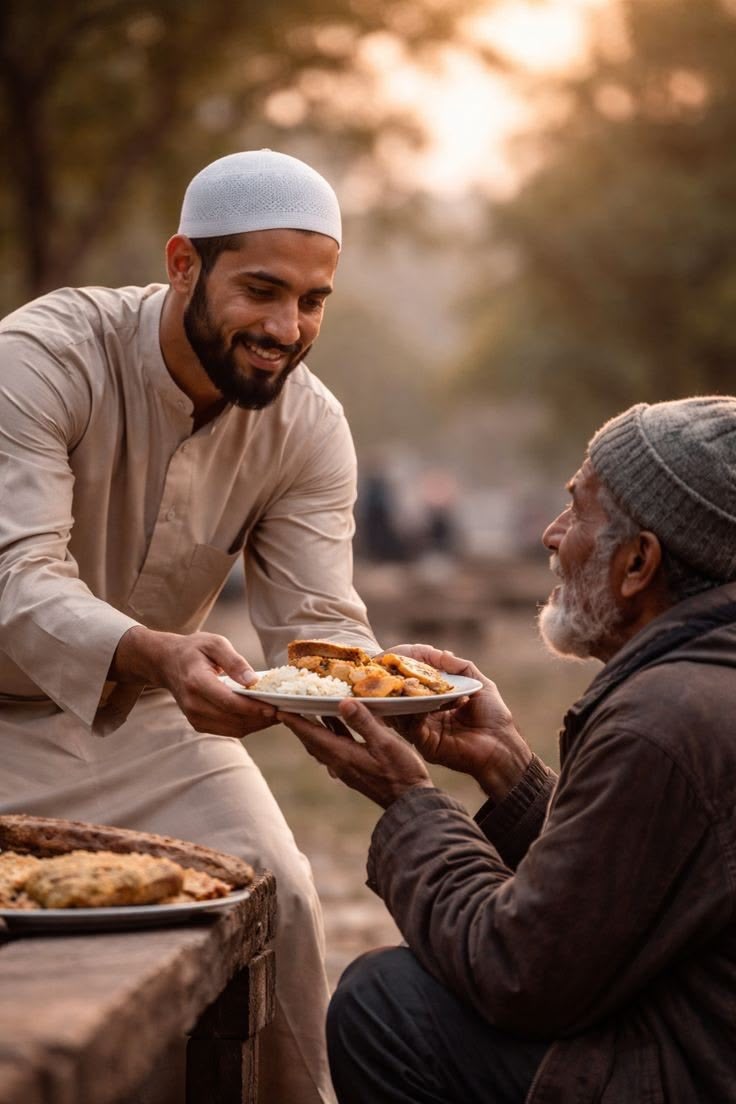
Imagine donating money to someone in need. You feel happy that you were able to help, so you take a picture, post it on social media, and write a caption encouraging others to give. Your post receives hundreds of likes, people praise your generosity, and your followers begin to see you as a kind and charitable person.
But later, a quiet question enters your mind:
Would I have done the same thing if nobody could see it?
This is a question worth reflecting on.
In today’s digital world, almost every moment can become content. We share our meals, achievements, travels, relationships, and personal experiences. Even our acts of worship can find their way onto social media. People post videos of themselves reciting the Qur’an, pictures of their charitable activities, recordings of their prayers during Ramadan, and updates about their Islamic journeys.
There is nothing automatically wrong with sharing beneficial Islamic reminders, encouraging charity, or documenting meaningful experiences. Social media can be a powerful tool for spreading goodness.
However, it also presents a spiritual challenge: Are we doing good deeds for the sake of Allah, or are we gradually becoming attached to the recognition that comes from doing them?
This question brings us to riya — showing off in acts of worship or performing good deeds to gain the attention and admiration of people.
Riya is not a new problem. It existed long before smartphones, cameras, and social media. But the digital age has created new opportunities for our intentions to become entangled with likes, comments, views, and public approval.
A deed that could have remained between a servant and Allah can now become a performance before thousands of people.
This article explores the meaning of riya in Islam, how it can appear in our online lives, how to distinguish sincere sharing from showing off, and how to protect our intentions in a world that constantly encourages us to be seen.
WHAT IS RIYA IN ISLAM?
Riya comes from an Arabic root associated with showing or displaying something to others. In an Islamic context, it refers to performing or beautifying acts of worship so that people will see, admire, or praise the person performing them.
At its heart, riya is connected to intention.
A person may perform the same outward action as another person, yet the spiritual reality of their actions can differ because of what they seek through them.
Two Muslims may give charity. One gives sincerely for the sake of Allah, hoping for His reward and seeking to help someone in need. The other gives primarily to be admired as a generous person.
The outward action may look identical, but the intention is different.
Allah says:
“So whoever would hope for the meeting with his Lord — let him do righteous work and not associate in the worship of his Lord anyone.”Qur’an 18:110
This verse emphasizes the importance of sincere worship and directing it to Allah alone.
The Prophet Muhammad ﷺ also warned about the danger of performing deeds to gain a reputation among people.
In an authentic hadith, he explained that a person who performs good deeds to be seen by others will have that intention exposed by Allah, and a person who acts to gain a reputation will have that motive exposed. The hadith is recorded in Sahih al-Bukhari 6499.
These teachings remind us that worship is not merely about what people can observe. It is also about what we seek through our actions.
Allah knows the intention behind every post, every donation, every recitation, and every act of kindness — including intentions we may struggle to understand even within ourselves.
HOW SOCIAL MEDIA HAS CHANGED THE WAY WE DISPLAY GOOD DEEDS
In previous generations, many acts of charity and worship took place privately. A person could help a neighbour, feed a hungry family, pray during the night, or give money to someone in need without the wider community knowing.
Today, the situation is different.
A charitable act can be recorded, edited, uploaded, and distributed to thousands of people within minutes. A Qur’an recitation can become a viral video. A donation can become a promotional post. A personal act of worship can become part of someone’s online identity.
Social media does not automatically make these actions insincere. Public acts of goodness can encourage others, raise awareness, and inspire beneficial change.
The challenge arises when the desire to be seen begins influencing the deed itself.
Consider someone who wants to donate food to a struggling family. Initially, their concern is the family’s need. But after thinking about how the donation might look online, they begin arranging the scene for a better photograph, focusing on the camera, and choosing a caption that will attract admiration.
Gradually, the attention shifts from the person receiving help to the person giving it.
The charitable act becomes partly about creating an image.
This is where Muslims need to exercise caution. The question is not simply whether a deed appears online. The deeper question is whether the pursuit of attention is shaping our intentions and actions.
Social media can spread goodness, but it can also tempt us to value the appearance of goodness more than its sincerity.
WHEN GOOD DEEDS BECOME CONTENT
The digital world rewards visibility. Posts that attract attention receive likes, comments, shares, and sometimes financial opportunities. As a result, people can begin measuring their value by how much engagement their content receives.
This creates several spiritual risks.
1. When charity becomes a performance
Imagine a person helping someone who is struggling financially.
Instead of focusing entirely on the person’s needs, the giver begins recording the interaction. They make sure the camera captures the donation, the recipient’s reaction, and the emotional moment afterward.
They upload the video and wait for people to praise their generosity.
The problem is not necessarily that the donation was recorded. There can be legitimate reasons to document charitable work, such as accounting, fundraising, or demonstrating how an organization uses donations.
The concern is whether the recipient’s dignity and privacy are being respected, and whether the giver’s desire for admiration has become the main motivation.
People experiencing hardship deserve compassion, not humiliation or unnecessary exposure.
If you are sharing a charitable activity, ask yourself whether the content protects the dignity of the people involved and serves a genuine beneficial purpose.
Sometimes, the most beautiful way to help someone is to let the act remain private.
2. When worship becomes a way to build an image
A Muslim may begin sharing Qur’an recitations, prayer-related posts, or videos of religious activities.
These can be beneficial when the intention is to teach, encourage, or remind others of Allah.
However, a problem can develop when the person begins to feel that they must constantly demonstrate their religiousness to maintain their online identity.
They may become more concerned about looking spiritual than about improving their relationship with Allah.
They may feel disappointed when a religious post receives little engagement or become preoccupied with whether others regard them as knowledgeable, pious, or righteous.
This does not mean that everyone who posts Islamic content is guilty of riya. We cannot determine another person’s inner intention simply by looking at their social media account.
It does mean that anyone sharing religious content should regularly examine their own motives.
Ask yourself: Am I sharing this because it may benefit someone, or because I need people to see me as a good Muslim?
The answer may not always be simple, but asking the question can help protect sincerity.
3. When likes become more important than the deed
Suppose you share an Islamic reminder and receive only three likes. Later, you post something unrelated and receive hundreds.
You begin to wonder why people did not appreciate your religious content. You feel discouraged and consider stopping your efforts.
It is understandable to notice engagement. Social media platforms are designed to make these numbers visible.
But if your motivation for sharing beneficial knowledge depends entirely on how much praise you receive, your heart may become too attached to public approval.
The value of a beneficial action is not determined by its popularity.
A sincere reminder may reach only one person and still benefit them. A private act of charity may never become known to the public, yet it remains meaningful.
We should not measure the worth of our deeds by the size of the audience watching them.
IS IT WRONG TO POST YOUR GOOD DEEDS ON SOCIAL MEDIA?
This is an important question, and the answer requires balance.
Not every public good deed is riya, and not every private deed is automatically sincere.
Islam encourages sincerity, but it also recognizes that public acts of goodness can serve legitimate purposes.
Allah says:
“If you disclose your charitable expenditures, they are good; but if you conceal them and give them to the poor, it is better for you, and He will remove from you some of your misdeeds.”Qur’an 2:271
This verse provides a valuable perspective on charitable giving. Public charity can be good, while concealing charity is described as better in the context of the verse.
For example, sharing a fundraising campaign can encourage others to contribute. Posting a reminder about prayer can help someone remember Allah. Documenting a community food drive can demonstrate its impact and attract resources for people in need.
These are potentially beneficial purposes.
However, posting good deeds can become spiritually dangerous when the main goal is to gain admiration, appear superior, or establish a reputation for righteousness.
The practical lesson is not that every good deed must be hidden. Rather, it is that public visibility should serve a sound purpose without displacing sincerity.
Before posting, consider three questions:
- Intention: Why do I want to share this?
- Benefit: Will sharing it genuinely help or encourage someone?
- Dignity: Does this post respect the privacy and dignity of everyone involved?
If you are unsure about a particular situation, seek guidance from a knowledgeable scholar who can consider the relevant circumstances.
And remember: we should be cautious about declaring other people’s intentions. A public post alone does not tell us what is in someone’s heart.
THE DANGER OF WANTING PEOPLE TO THINK YOU ARE PIOUS
One of the subtler forms of spiritual danger is becoming attached to the identity of being seen as a righteous person.
You may begin by wanting to improve your relationship with Allah. Over time, however, you become increasingly concerned with how other people perceive you.
You want people to regard you as knowledgeable, generous, disciplined, or deeply religious.
You may feel uncomfortable when someone does not recognize your efforts. You may become defensive when your knowledge is questioned or disappointed when another person receives more praise for their good deeds.
Gradually, your attention shifts from pleasing Allah to maintaining a particular image.
This is spiritually dangerous because human approval is unstable.
Today, people may praise you. Tomorrow, they may criticize you. One post may receive thousands of likes, while another receives almost none.
If your sense of spiritual worth depends on people’s reactions, your peace will rise and fall with their opinions.
Islam teaches us to seek Allah’s pleasure rather than making public admiration the ultimate purpose of our lives.
This does not mean that receiving praise is inherently wrong. A person may be praised for a sincere deed without having sought that praise.
The challenge is what happens inside us when praise arrives.
Can you remain humble when people admire you? Can you continue doing good when nobody notices? Can you accept being unknown to people while striving to be sincere before Allah?
These are important questions for anyone seeking to protect their heart.
HOW TO PROTECT YOUR INTENTION IN THE DIGITAL AGE
Protecting sincerity does not require you to abandon social media completely. It requires you to become more conscious of how you use it and how it affects your heart.
Here are seven practical ways to help protect your intentions.
1. Examine your intention before posting
Before sharing a religious reminder, charitable activity, or personal achievement, pause for a moment.
Ask yourself why you want to post it.
Are you hoping to educate others? Raise funds for a worthy cause? Encourage someone to perform a good deed? Or are you primarily seeking admiration?
Be honest with yourself.
Intentions can be complicated, and people can have mixed motives. If you notice a desire for praise, do not simply ignore it. Work to correct your intention and consider whether posting is necessary.
You do not have to make every good deed public.
2. Keep some good deeds between you and Allah
One practical way to nurture sincerity is to maintain acts of worship and kindness that nobody else knows about.
You might give charity privately, pray voluntary prayers without telling anyone, make du’a for someone without informing them, or help a person without announcing it.
These private acts can remind you that your relationship with Allah does not depend on your online identity.
They also give you opportunities to practise doing good without expecting recognition.
You do not need to post about every beneficial thing you do.
Some moments can remain private.
3. Stop measuring your worth by engagement
Likes, views, and comments are measurements of online interaction. They are not reliable measurements of your sincerity or standing with Allah.
A post receiving little attention does not automatically mean it lacks value. A popular post does not automatically mean it is spiritually superior.
If you create Islamic content, focus on accuracy, usefulness, good character, and the benefit you hope to provide.
Do not let the pursuit of engagement encourage you to exaggerate religious claims, sensationalize Islamic teachings, or turn serious matters into entertainment.
Quality and sincerity matter more than the appearance of popularity.
4. Avoid exposing people in the name of charity
When documenting charitable activities, protect the privacy and dignity of recipients.
Do not assume that a person who accepts help has agreed to become the subject of public content.
Avoid using someone’s distress, tears, or humiliation to make your post more emotional.
Where documentation is necessary, obtain appropriate consent and consider whether the person can freely decline without losing access to help.
Charity should serve the person in need, not turn their hardship into a tool for someone else’s reputation.
5. Be careful with captions and self-praise
Sometimes the image itself is not the biggest concern. The caption reveals more about the way a person wants to be perceived.
For example, there is a difference between saying, “Our community volunteers distributed food to families today. Here is how you can contribute,” and writing a caption designed primarily to emphasize your own generosity.
Of course, context matters, and a caption alone cannot establish someone’s intention.
Still, it is wise to avoid unnecessary self-praise and focus on the purpose of the activity.
When sharing a good deed, give credit where appropriate, acknowledge the people who contributed, and direct attention toward the need being addressed rather than presenting yourself as the hero.
6. Do not let fear of riya stop you from doing good
There is another danger worth mentioning.
Some people become so afraid of showing off that they stop sharing beneficial reminders, avoid public charity altogether, or become anxious whenever anyone notices their good deeds.
This is not a healthy response to the concern about riya.
The possibility of an insincere intention should encourage self-examination, not automatically prevent every public act of goodness.
If you have a beneficial reason to share something, correct your intention as best you can and proceed responsibly.
Do not assume that every mixed feeling makes your deed worthless. Instead, strive for sincerity and seek Allah’s help in maintaining it.
If these worries become persistent or overwhelming, consider speaking with a knowledgeable scholar who can help you distinguish reasonable spiritual caution from excessive doubt.
7. Make du’a for sincerity
Sincerity is something worth asking Allah to strengthen.
We may begin an action with a good intention and later become distracted by praise. We may notice that our hearts are becoming attached to recognition and need to correct ourselves.
Rather than assuming that sincerity will always come naturally, ask Allah to help you worship Him sincerely.
One useful supplication is the du’a for protection from shirk, including forms of it that a person may not recognize.
Arabic:
اللَّهُمَّ إِنِّي أَعُوذُ بِكَ أَنْ أُشْرِكَ بِكَ وَأَنَا أَعْلَمُ، وَأَسْتَغْفِرُكَ لِمَا لَا أَعْلَمُ
Transliteration:
Allahumma inni a’udhu bika an ushrika bika wa ana a’lam, wa astaghfiruka lima la a’lam.
Meaning:
“O Allah, I seek refuge in You from knowingly associating anything with You, and I seek Your forgiveness for what I do unknowingly.”
This supplication is reported from Abu Musa al-Ash’ari and recorded in Al-Adab al-Mufrad by Imam al-Bukhari. Its chain has been graded authentic by some scholars, including al-Albani.
It is a useful reminder to seek Allah’s protection and forgiveness while recognizing that our understanding of our own intentions may be incomplete.
WHAT IF YOU HAVE ALREADY POSTED YOUR GOOD DEEDS?
Perhaps you are reading this article and thinking about all the times you posted a donation, shared a video of your Qur’an recitation, or uploaded a photograph from an Islamic event.
You may now be wondering whether your intentions were sincere.
Do not rush to condemn yourself.
The fact that you shared something publicly does not automatically prove that you committed riya. You cannot determine the spiritual reality of every past action simply by looking at whether it was visible to others.
Instead, reflect honestly.
Why did you share the post? Was there a beneficial purpose? Were you seeking admiration? Did you respect other people’s privacy? Is there something you would approach differently in the future?
If you recognize that you were seeking praise, turn to Allah in repentance and work on correcting your intentions. You do not need to remain trapped in shame over your past.
If your intention was sincere and you shared something for a legitimate benefit, do not assume that the presence of an audience invalidated your deed.
And if you are genuinely uncertain, avoid making sweeping judgments about yourself without knowledge.
The goal of self-examination is to improve, not to become consumed by suspicion about every action.
Allah knows what is in your heart, including your struggles to become more sincere.
A REMINDER FROM THE QUR’AN: DO NOT CANCEL YOUR GOOD DEEDS THROUGH REMINDERS AND HARM
When discussing public charity, another Qur’anic teaching is especially relevant.
Allah says:
“O you who have believed, do not invalidate your charities with reminders or injury.”Qur’an 2:264
The verse warns believers against undermining their charitable deeds through reminders of their generosity and through harm.
This is an important reminder for the digital age.
Imagine helping someone and later using the donation to embarrass them, remind them of their dependence on you, or portray them as permanently indebted to you.
The original act may have been beneficial, but your later conduct can cause real harm.
Social media can make this particularly easy. A person may publicly remind others of their generosity, share private details about a recipient, or use a past donation to build a reputation while exposing someone else’s vulnerability.
Charity should not become a means of controlling, humiliating, or manipulating the people who receive it.
A sincere concern for Allah’s pleasure should influence not only how we give but also how we treat people afterward.
Do not let the desire to be praised cause you to forget the dignity of the person you helped.
THE DIFFERENCE BETWEEN INSPIRING OTHERS AND SHOWING OFF
A person might reasonably ask: If we become cautious about posting good deeds, how can we inspire others to do good?
The answer is to focus on the purpose and manner of sharing.
Consider two examples.
Example one: Sharing to encourage goodness
A community organization shares photographs of a food distribution, explains the number of families reached, protects recipients’ privacy, and invites others to volunteer or donate.
The content has a clear practical purpose. It helps people understand the project and participate in beneficial work.
Example two: Sharing primarily to attract admiration
An individual records a vulnerable person’s distress, emphasizes their own generosity, and presents the encounter in a way that humiliates the recipient while inviting praise.
Here, the content raises serious concerns about dignity, intention, and harm.
The distinction cannot always be established from a post alone. A person’s intention is known fully to Allah, and even apparently similar situations can differ in their circumstances.
Still, the examples show why public visibility alone is not the decisive issue. Purpose, intention, conduct, and consequences all matter.
The aim is not to hide every good deed. It is to ensure that sharing goodness does not replace the goodness itself.
A PERSONAL CHECKLIST BEFORE YOU SHARE A GOOD DEED
Before posting an act of worship, charity, or kindness, take a moment to reflect on the following questions:
- Am I sharing this for a genuine beneficial purpose?
- Would I still perform this deed if nobody praised me?
- Am I respecting the privacy and dignity of the people involved?
- Does this post encourage goodness, or does it mainly advertise my own image?
- Am I willing to continue doing good if this post receives little or no attention?
- Have I checked that any religious information I am sharing is accurate?
These questions are not a test that gives you perfect certainty about your intentions. They are practical reminders to pause, reflect, and make better choices.
You will not always have a simple answer to every question. Sincerity requires ongoing attention, and intentions can change.
When you notice a problem, correct it as best you can.
When you are uncertain, seek knowledge and guidance.
And when you do good, remember the One for whose sake you hope the deed will be accepted.
CONCLUSION: LET ALLAH BE THE REASON YOU DO GOOD
The digital age has given us extraordinary opportunities to spread knowledge, encourage charity, and remind people of Allah. A single post can reach someone who needs encouragement, connect donors with a worthwhile cause, or inspire another person to begin a beneficial habit.
These opportunities should not be dismissed.
But we must also recognize that constant visibility can challenge our sincerity. When likes, views, and praise become too important, we may begin doing good for the audience rather than for Allah.
Riya is a serious spiritual concern, but it should lead us to reflection rather than despair.
We do not need to assume that every public deed is insincere. We do not need to hide every act of charity. And we should not stop spreading beneficial knowledge merely because we fear what others might think.
Instead, we should examine our intentions, protect people’s dignity, keep some good deeds private, avoid unnecessary self-praise, and regularly ask Allah to help us remain sincere.
Remember that the most important audience for your worship is not the people watching your account.
Allah knows the deed you perform when nobody is looking. He knows the kindness you show without receiving thanks, the charity you give without announcing it, and the struggles you face while trying to correct your heart.
You do not need to prove your righteousness to the world.
You need to strive sincerely to worship Allah, treat people well, and do what is right.
So the next time you are about to post a good deed, pause and ask yourself: Am I sharing this to spread goodness, or am I beginning to seek goodness in the form of people’s praise?
Let that question encourage you to reflect, not to despair.
Do good when people are watching. Do good when nobody is watching. And above all, strive to do good for the sake of Allah.
May Allah purify our intentions, protect us from showing off, accept our acts of worship and charity, and make our public and private deeds pleasing to Him. Ameen.
A FINAL REFLECTION
If nobody ever liked your Islamic posts, praised your charity, or admired your acts of worship, would you still want to do good?
Take a moment to reflect on that question.
You do not need to share every act of kindness. You do not need to announce every achievement in worship. And you do not need public recognition to make your life meaningful.
Some of the most important work you do may be known only to Allah.
May we be more concerned with the sincerity of our deeds than the size of our audience.
If this article benefited you, share it with someone who may appreciate a reminder about sincerity, humility, and the importance of protecting our intentions in the digital age.
