


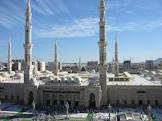
Madinah holds a special place in the hearts of Muslims around the world. It is the city to which Prophet Muhammad ﷺ migrated, the home of the first Muslim community, and the location of Al-Masjid an-Nabawi, the Prophet’s Mosque.
For many Muslims, visiting Madinah is an opportunity to learn more about the life of the Prophet ﷺ, reflect on the sacrifices of his Companions, and explore places connected to the early history of Islam.
Beyond the Prophet’s Mosque, the city contains several historic landmarks, including Masjid Quba, Masjid al-Qiblatayn, the Seven Mosques, Mount Uhud, and Al-Baqi Cemetery.
Each site has its own history. Some are connected to events described in the Qur’an, while others preserve the memory of important moments in the life of the Prophet ﷺ and the early Muslim community.
However, it is important to understand that not every historic site has a prescribed religious ritual attached to it. Learning about these places helps visitors appreciate their history while ensuring that acts of worship remain grounded in authentic Islamic teachings.
In this guide, we will explore the Seven Mosques and other significant historic sites in Madinah, their background, and what visitors should know before visiting them.
1. THE SEVEN MOSQUES OF MADINAH
The Seven Mosques, known in Arabic as Al-Masajid as-Sab’ah, are a group of historic mosques situated near Mount Sal’ on the western side of Madinah.
They are associated with the Battle of the Trench, also known as the Battle of Al-Khandaq or the Battle of the Confederates, which took place in the fifth year after the Hijrah.
During this conflict, a coalition of forces marched against Madinah. Following the advice of Salman al-Farisi (may Allah be pleased with him), the Muslims dug a trench to help defend the city against the attacking forces.
The defensive strategy helped protect Madinah during a difficult period for the early Muslim community.
The Qur’an refers to the threat faced by the believers during this event in Surah Al-Ahzab.
Allah says:
“O you who have believed, remember the favor of Allah upon you when armies came to you and We sent upon them a wind and armies [of angels] you did not see.”
— Qur’an 33:9
The historic mosques in this area commemorate the Battle of the Trench and the people associated with its defence. They were constructed or developed after the Prophet’s lifetime, and the buildings have changed over the centuries.
Why are they called the Seven Mosques?
Interestingly, the name can be confusing because visitors may find six principal historic mosques commonly associated with the site rather than seven separate buildings.
The traditional grouping includes Masjid al-Fath and mosques associated with Salman al-Farisi, Abu Bakr as-Siddiq, Umar ibn al-Khattab, Ali ibn Abi Talib, and Sa’d ibn Mu’adh. Explanations for the seventh mosque vary, including references to other nearby historic mosque sites.
The precise historical identification and number are not entirely settled.
What should visitors know?
The Seven Mosques offer an opportunity to learn about the Battle of the Trench and the circumstances faced by the early Muslims.
Visitors should remember that the site is primarily of historical interest. Visiting every mosque is not a requirement of Hajj or Umrah, and there is no established special prayer that must be performed at each one.
The benefit of the visit lies in understanding Islamic history, reflecting on the events that took place in Madinah, and learning from the faith and perseverance of the early Muslim community.
2. MASJID AL-FATH: THE MOSQUE OF VICTORY
Masjid al-Fath is the best-known mosque within the Seven Mosques area.
Its name means the Mosque of Victory. It stands on elevated ground near Mount Sal’ and is associated with the Battle of the Trench.
The mosque commemorates the period when the Muslim community faced a serious threat from the confederate forces.
The Battle of the Trench was not an easy moment for the Muslims. Madinah faced the possibility of attack, and the believers experienced fear, uncertainty, and considerable hardship.
Surah Al-Ahzab describes the pressure faced by the Muslim community during this period and also highlights the importance of faith and steadfastness.
The name Masjid al-Fath reflects the eventual relief and victory granted to the Muslims.
Visitors may find the location useful for understanding the geography of the historic battlefield and the defensive position associated with this event.
However, it is important not to assume that every detail commonly repeated in local accounts has the same level of historical certainty. Visitors should distinguish between what is established in authentic Islamic sources and what comes from later historical traditions.
3. MASJID QUBA: THE FIRST MOSQUE IN ISLAM
Masjid Quba is among the most significant mosques in Madinah and is widely recognised as the first mosque established by the Prophet Muhammad ﷺ and the early Muslim community after the Hijrah.
When the Prophet ﷺ migrated from Makkah to Madinah, he stayed at Quba before proceeding into the city.
The mosque is associated with the early establishment of the Muslim community and the importance of worship, purity, and devotion to Allah.
Allah says:
“A mosque founded on righteousness from the first day is more worthy for you to stand in.”
— Qur’an 9:108
This verse is commonly discussed in connection with Masjid Quba in Islamic scholarship.
Masjid Quba also has a special virtue established in hadith. The Prophet ﷺ encouraged visiting and praying at the mosque, and narrations describe the reward associated with performing prayer there after purification.
For visitors to Madinah, Masjid Quba offers both historical significance and an opportunity to perform an act of worship supported by Islamic teachings.
Unlike a visit to every mosque in the Seven Mosques area, visiting Masjid Quba has a specific basis in the Sunnah.
Visitors should still make sure they learn the relevant practices from reliable sources rather than assuming that every local custom is part of the religion.
4. MASJID AL-QIBLATAYN: THE MOSQUE OF THE TWO QIBLAHS
Masjid al-Qiblatayn is another important historic mosque in Madinah.
Its name means the Mosque of the Two Qiblahs, a reference to the change in the direction of prayer from Jerusalem to the Kaaba in Makkah.
In the early period of Islam, Muslims prayed towards Jerusalem. Later, Allah instructed the Prophet ﷺ and the Muslim community to turn towards Masjid al-Haram.
Allah says:
“So turn your face toward al-Masjid al-Haram. And wherever you [believers] may be, turn your faces toward it…”
— Qur’an 2:144
The change of qiblah was an important event in the development of the Muslim community. It demonstrated obedience to Allah and established the direction Muslims continue to face during salah.
Masjid al-Qiblatayn commemorates this event in Islamic history.
Visitors should understand that its name reflects the historical association with the change of qiblah. It does not mean that Muslims are required to pray in two directions today.
Muslims face the Kaaba in Makkah during their prayers, wherever they are in the world.
5. MOUNT UHUD: REMEMBERING THE BATTLE OF UHUD
Mount Uhud is one of the most recognisable landmarks associated with the early history of Islam.
Located north of Madinah, it is connected to the Battle of Uhud, which took place in the third year after the Hijrah.
During the battle, the Muslims faced an opposing force from Makkah. The events included intense fighting, the loss of many Companions, and the martyrdom of Hamza ibn Abd al-Muttalib (may Allah be pleased with him), the Prophet’s ﷺ uncle.
The battle also provides important lessons about obedience, discipline, perseverance, and the consequences of disregarding instructions.
The Qur’an discusses the events of Uhud in Surah Aal Imran, particularly verses 121–175.
The experience was a difficult one for the Muslim community. Yet the lessons from the battle continued to shape the believers and their understanding of faith and responsibility.
Today, visitors can see Mount Uhud and the surrounding area associated with the battle and the martyrs.
The site offers an opportunity to learn about the sacrifices of the Companions and reflect on the events that shaped the early Muslim community.
Visitors should approach the area respectfully and remember that the purpose of learning about the battle is to understand its history and lessons, not to invent rituals associated with the mountain.
6. THE CEMETERY OF THE MARTYRS OF UHUD
Near Mount Uhud is the cemetery associated with the martyrs of the Battle of Uhud.
A number of the Prophet’s ﷺ Companions who died during the battle were buried in this area. Among them was Hamza ibn Abd al-Muttalib (may Allah be pleased with him), who is remembered for his courage and support of Islam.
The cemetery is a reminder of the sacrifices made by the early Muslims in difficult circumstances.
Islam teaches Muslims to remember death, reflect on the Hereafter,
