


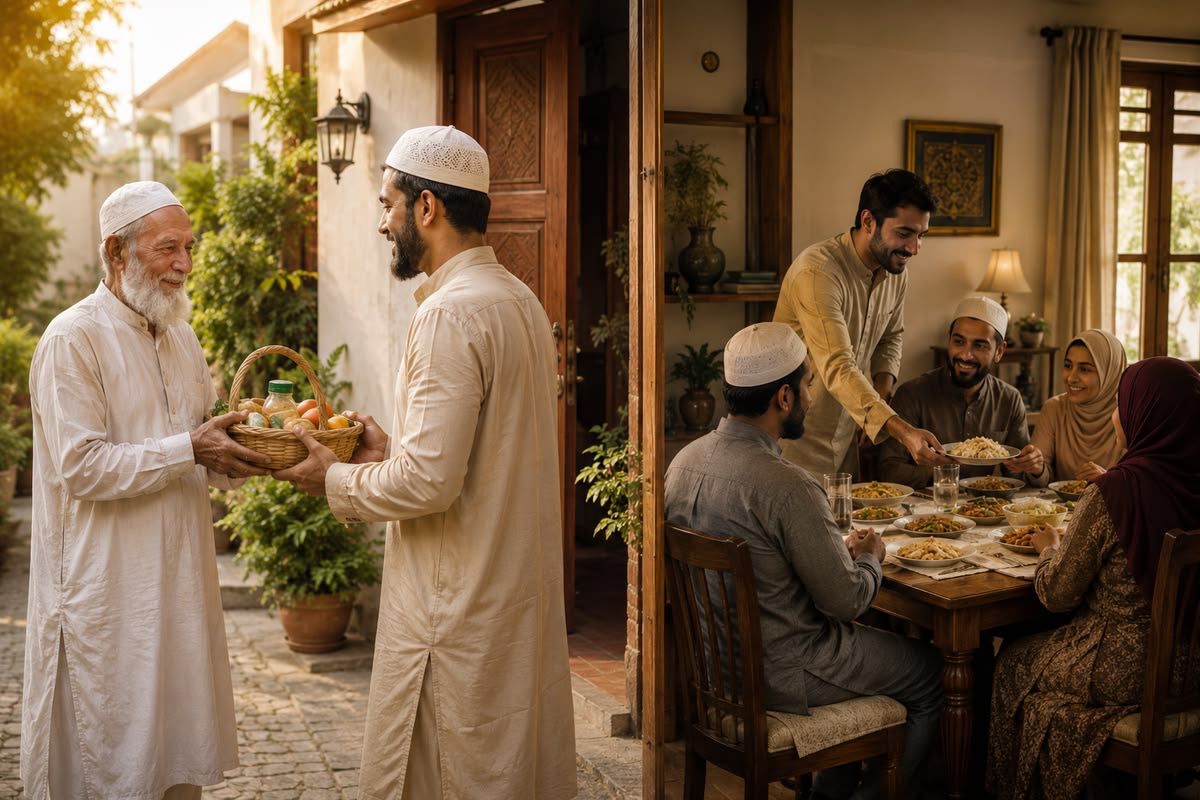
A Muslim can perform a good deed and still need to ask an important question: Why am I doing this?
The action may look good. The words may sound religious. Other people may admire what they see. But Islam teaches us that what matters is not only what appears on the outside. Allah also knows what is inside the heart.
This is where ikhlas, sincerity, becomes essential.
Ikhlas means doing an act sincerely for the sake of Allah, seeking His pleasure and reward rather than people’s praise, recognition, approval or admiration. It is one of the foundations of accepted worship because a Muslim is not simply called to do good; they are called to do good with the right intention.
Allah says:
“And they were not commanded except to worship Allah, being sincere to Him in religion.” (Qur’an 98:5)
Sincerity therefore is not an optional quality that makes worship more beautiful. It is at the heart of what worship is supposed to be.
THE SAME DEED CAN HAVE DIFFERENT VALUES
Two people can perform exactly the same action while having completely different intentions.
Two people may give charity. One gives because they genuinely want Allah’s pleasure. The other gives because important people are watching and they want to be regarded as generous.
Two people may teach Islam. One wants to benefit others for Allah’s sake. The other wants people to regard them as knowledgeable.
Two people may pray in the same row. One is thinking about standing before Allah. The other is more concerned about how their prayer looks to the people around them.
Outwardly, the actions may look identical.
But Allah knows what is inside the hearts.
The Prophet Muhammad ﷺ said:
“Actions are judged by intentions.” (Sahih al-Bukhari and Sahih Muslim)
This is why Muslims must pay attention to the heart behind their actions.
IKHLAS MEANS SEEKING ALLAH’S APPROVAL
Human beings naturally like appreciation.
We enjoy hearing that we did something well. We appreciate compliments. We like being recognised for our efforts.
There is nothing inherently wrong with that.
The danger begins when people’s approval becomes the reason we do good.
A person may begin asking themselves:
“Will people notice?”
“Will they praise me?”
“What will they think of me?”
“Will they know that I donated?”
“Will they see that I am religious?”
When those questions become more important than seeking Allah’s pleasure, sincerity can begin to weaken.
The sincere believer tries to move the heart back towards Allah.
Instead of asking, “Who will notice?”, they ask, “Will Allah accept this?”
That is a completely different way of looking at good deeds.
IKHLAS IS NOT THE SAME AS BEING PERFECT
Sincerity does not mean that a person will never experience thoughts of wanting recognition.
The heart can be complicated.
A person may begin a deed sincerely and later notice that they are enjoying people’s praise. They may feel proud after receiving compliments. They may suddenly become conscious that someone is watching them.
The important thing is what they do when they notice it.
They can renew their intention.
They can remind themselves why they started.
They can continue the good deed without deliberately seeking attention.
They can ask Allah to purify their heart.
Ikhlas is therefore something a Muslim continually works on.
KEEP SOME GOOD DEEDS PRIVATE
One of the practical ways to strengthen sincerity is to have acts of worship that nobody else knows about.
Give charity secretly.
Make dua when nobody is around.
Pray extra Salah without announcing it.
Help someone without telling everyone.
Read Qur’an privately.
Wake up for worship when there is no audience.
These private acts are valuable because they remove the opportunity to seek people’s admiration.
When nobody knows about the deed, the heart is forced to confront the real reason for doing it.
Allah knows.
And for the sincere believer, that is enough.
IKHLAS IN EVERYDAY LIFE
Ikhlas is not limited to Salah, fasting and charity.
It can enter almost every part of a Muslim’s life.
A parent can work hard to provide for their family while seeking Allah’s reward.
A business owner can deal honestly because they fear Allah.
A student can study because they want to develop knowledge that will benefit themselves and others.
A husband can care for his family as an act of worship.
A wife can serve her family while seeking Allah’s pleasure.
A person can help a neighbour without expecting anything in return.
When the intention is sincere, ordinary actions can become acts of worship.
This is one of the beautiful things about Islam: sincerity can transform everyday life into something meaningful.
IKHLAS AND SOCIAL MEDIA
In today’s world, sincerity can be particularly difficult because almost everything can be displayed publicly.
People can document their charity, their worship, their Islamic activities and their good deeds instantly.
But the fact that something is public does not automatically make it insincere.
There are legitimate reasons for sharing beneficial Islamic content or encouraging others to give charity. Teaching, educating and inspiring good are all valuable.
The question remains: What is happening inside the heart?
Would you still do the deed if nobody liked the post?
Would you still give if nobody knew?
Would you still help if there was no photograph?
Would you still worship if there were no audience?
These questions can help us examine our intentions.
IKHLAS REQUIRES FIGHTING THE EGO
The human ego likes recognition.
It wants to be important.
It wants to be praised.
It wants people to know what we have accomplished.
That is why sincerity can sometimes require a struggle against the self.
You may do something wonderful and then deliberately avoid telling everyone about it.
You may know more than someone else but choose not to humiliate them.
You may have helped someone but refuse to remind them of what you did every time you disagree.
You may receive praise and simply thank Allah rather than allowing the praise to inflate your heart.
These are small battles, but they matter.
WHEN PEOPLE DO NOT APPRECIATE YOU
Ikhlas becomes especially important when your good deeds are not recognised.
You help someone and they never thank you.
You support someone and they forget what you did.
You work hard and somebody else receives the credit.
You give your time and nobody notices.
These situations can reveal what our hearts were expecting.
If our entire motivation was people’s appreciation, disappointment can make us stop doing good.
But if Allah’s pleasure was the primary goal, the lack of recognition does not erase the value of the deed.
You can tell yourself:
“Allah saw it.”
Sometimes that is the greatest comfort a believer can have.
IKHLAS DOES NOT MEAN IGNORING PEOPLE’S RIGHTS
Sincerity also does not mean that we become careless about how our actions affect others.
A person cannot harm someone and simply say, “Allah knows my intention.”
Good intentions do not make a wrong action right.
Islam requires both proper intention and proper conduct.
If you owe someone money, you should repay them.
If you hurt someone, you should seek forgiveness where appropriate.
If you have responsibilities, you should fulfil them.
Ikhlas means doing what is right for Allah, not using religious language to excuse wrongdoing.
ASK ALLAH FOR A SINCERE HEART
Because sincerity concerns the heart, Muslims should not become overly confident about their own intentions.
We should ask Allah to purify our hearts.
We should regularly examine ourselves.
Why am I doing this?
Who am I trying to impress?
Would I still do this if nobody knew?
Am I more concerned about people’s approval than Allah’s approval?
Am I becoming upset because nobody recognised my effort?
These questions are not meant to make us abandon good deeds. They are meant to help us correct the heart behind those deeds.
The goal is to reach a point where Allah’s approval becomes more valuable than human applause.
THE DEED NOBODY SEES
There is something deeply beautiful about a good deed that exists between a person and Allah alone.
Nobody applauds it.
Nobody shares it.
Nobody comments on it.
Nobody knows the sacrifice behind it.
But Allah knows.
That is the heart of ikhlas.
A sincere Muslim does not need every good deed to become a public achievement. Sometimes the most precious worship is the worship that leaves no trace in the eyes of people but is known completely by Allah.
The real question is not whether people think we are good Muslims.
It is whether Allah is pleased with the Muslim we are when nobody is watching.
