



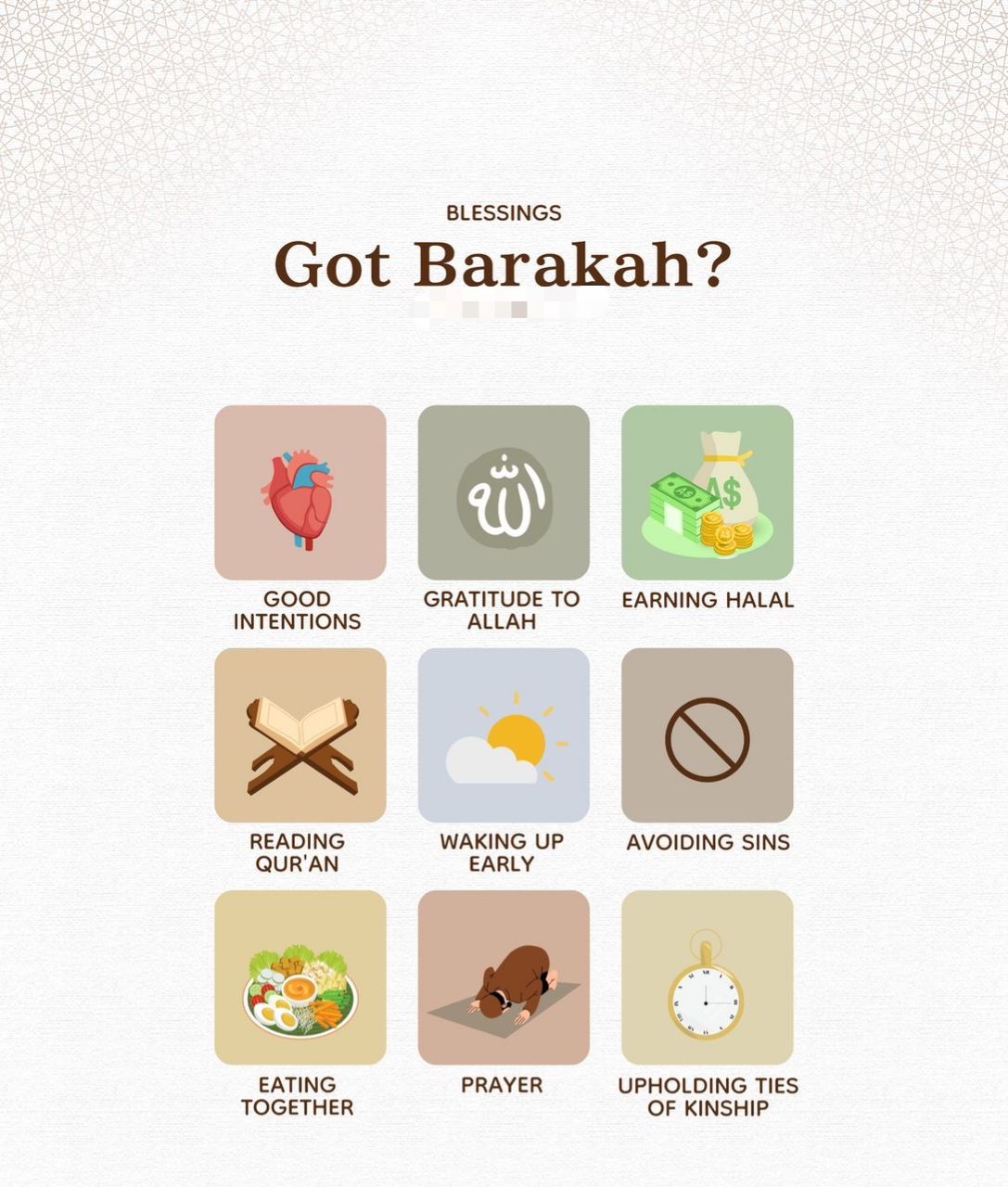
Barakah is one of the most important concepts in Islam, yet many people misunderstand it or reduce it to “having more money” or “being lucky.” In reality, barakah is not about quantity. It is about benefit, consistency, and divine blessing in what you already have.
A person may have little wealth but live a peaceful and productive life. Another may have a lot of money but feel constantly stressed and dissatisfied. The difference is often barakah.
WHAT BARAKAH MEANS
Barakah refers to divine blessing from Allah that makes something grow in goodness and benefit beyond what is normally expected.
It can appear in:
- Time (getting more done in less time)
- Wealth (money lasting longer than expected)
- Health (strength despite limitations)
- Family (peace and unity at home)
- Knowledge (ability to understand and apply what you learn)
Barakah is not always visible in numbers. It is visible in outcomes.
BARAKAH IS NOT THE SAME AS INCREASE
A common mistake is assuming barakah means “more.”
But Islamically:
- More money without barakah can still feel insufficient.
- Less money with barakah can feel enough and stable.
This is why two people with the same salary can have very different financial experiences.
One is always struggling. The other is content and stable.
The difference is not only income. It is barakah.
WHAT REMOVES BARAKAH
Islamic teachings and lived experience point to several factors that reduce barakah:
1. SIN AND DISOBEDIENCE
Persistent sin affects spiritual and practical life. It reduces peace, clarity, and sometimes productivity.
This does not mean every hardship is punishment, but continuous neglect of obedience can affect a person’s life stability.
2. WASTING TIME
Time is one of the biggest areas where barakah is lost today.
Excessive scrolling, entertainment without control, and lack of planning often create the feeling that time is always insufficient.
Two people may have the same 24 hours, but very different results.
3. NEGLECTING PRAYER
Salah is directly linked to barakah. When prayer becomes irregular or rushed, people often notice a lack of structure and calm in their lives.
Prayer is not only worship. It is discipline and alignment.
4. DISHONESTY AND HARSH DEALINGS
Barakah is removed from earnings that come through oppression, cheating, or dishonesty. Even if such wealth increases, it often brings stress or instability.
5. INGRATITUDE
Constant complaining and lack of gratitude often blinds a person to existing blessings.
Allah says that gratitude increases blessings, while ingratitude leads to loss.
HOW TO ATTRACT BARAKAH
Barakah is not random. Islam gives clear actions that invite it.
1. OBEY ALLAH CONSISTENTLY
The foundation of barakah is obedience. This includes:
- Regular prayer
- Avoiding major sins
- Seeking forgiveness when mistakes happen
Consistency matters more than perfection.
2. START WITH HALAL SOURCES
Whether income, food, or lifestyle choices, halal living is one of the strongest causes of barakah.
Even if something is small, halal sustenance carries stability.
3. SAY BISMILLAH AND REMEMBER ALLAH
Simple acts of remembrance bring barakah into daily routines.
Before eating, working, traveling, or starting tasks, mentioning Allah brings mindfulness and blessing into action.
4. GIVE CHARITY
Charity does not reduce wealth in Islam. Instead, it increases barakah in it.
Even small, consistent giving is effective.
5. MAINTAIN FAMILY TIES
Keeping good relationships with family is strongly linked to increased provision and barakah in life.
Cutting ties, on the other hand, removes blessing.
6. WAKE UP EARLY
The Prophet ﷺ made dua for barakah in the early hours of the day. Many successful and productive people notice that early mornings carry more focus and clarity.
7. MAKE DU’A FOR BARAKAH
A simple but powerful practice is asking Allah directly for barakah in:
- time
- wealth
- health
- knowledge
- family
Because ultimately, barakah is something only Allah can grant.
FINAL THOUGHTS
Barakah is not about having the most. It is about benefiting the most from what you have.
It turns small resources into sufficient ones. It turns ordinary time into productive time. It turns effort into meaningful results.
Two people may live similar lives externally, but only one may feel ease, stability, and satisfaction. That difference is often barakah.
The goal is not simply to increase possessions, but to seek Allah’s blessing in everything already in your life.
