

HOW SALAH SHAPES A CHILD’S CHARACTER: DISCIPLINE, CONFIDENCE, AND INNER STRENGTH

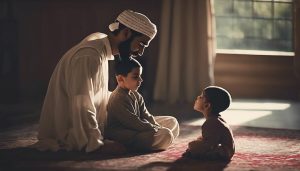
Salah is more than a ritual. When introduced and nurtured properly, it becomes one of the strongest character-building tools in a child’s life. It teaches habits, values, emotions, discipline, and mindset in ways that no classroom or textbook can match. Children who grow up connected to their prayer develop qualities that stay with them long after childhood, guiding them through school, friendships, adulthood, and every challenge in between.
This isn’t poetry or flowery language these are real, practical changes seen in children who are raised upon Salah with gentleness and consistency.
DISCIPLINE THROUGH DAILY ROUTINE
Nothing shapes discipline like a repeated act. When a child prays regularly, they slowly train their mind to respect time, prioritize tasks, and follow structure. Salah builds an internal clock that teaches responsibility long before they start managing homework or chores.
A child who learns to pause playtime, activities, or comfort to pray learns the deeper lesson of choosing long-term benefit over short-term ease. That mindset becomes the foundation of academic discipline, emotional maturity, and self-control.
CONFIDENCE FROM SPIRITUAL IDENTITY
Children today face pressure from school, society, and social media. A strong spiritual identity becomes a shield. When a child prays, they grow up knowing:
“I am a Muslim.”
“I stand before Allah.”
“I belong to something bigger than myself.”
This gives them confidence in who they are. It grounds them. It builds inner stability so they are less shaken by peer pressure or insecurity. Knowing they have a direct link to Allah gives them a sense of worth that doesn’t depend on popularity or performance.
CALMNESS AND EMOTIONAL CONTROL
Many parents notice a pattern: children who pray tend to calm down faster after anger or frustration. Salah teaches them to pause, breathe, and reset. The movements themselves create emotional regulation standing, bowing, prostrating, sitting each slowing down their thoughts.
Sujood especially teaches humility and emotional release. When a child learns they can bring their worries to Allah, they develop healthier emotional habits. Instead of reacting with anger, crying for long periods, or withdrawing, they learn to process feelings through connection with their Creator.
MORAL GROWTH AND CONSCIENCE
Salah strengthens a child’s sense of right and wrong. When they stand to pray, they remember that Allah is watching and guiding them. They become more aware of their actions how they speak, behave, or treat others.
This awareness gradually builds a strong conscience. It makes them more truthful, kinder, more respectful, and more thoughtful. The moral compass formed through prayer follows them into adulthood and influences how they make decisions.
PATIENCE AND SELF-CONTROL
Praying teaches children to stay still, follow steps, and wait their turn skills that many struggle with. Salah naturally trains focus and patience. Each movement requires calmness. Each recitation requires clarity. Each moment of stillness becomes practice for better behavior.
Over time, this helps them concentrate better in school, complete tasks without rushing, and handle frustration with maturity.
A SENSE OF ACCOUNTABILITY
When a child prays regularly, they learn that their actions matter. They begin to notice missed prayers. They feel responsible for showing up. This sense of accountability carries into every part of life schoolwork, responsibilities at home, and personal goals.
They learn that consistency brings reward and neglect has consequences. It’s a life skill disguised in a spiritual act.
HOPE, RESILIENCE, AND INNER STRENGTH
Life will challenge every child as they grow. Some will face disappointment, failure, heartbreak, or stress. A child who knows Salah knows they are never alone during hardship.
They learn to turn to Allah when things feel heavy. They learn that relief comes after patience. They learn that every difficulty has a solution. This makes them resilient. They become emotionally stronger than children who rely only on external sources for support.
Prayer becomes their anchor something steady in a world that constantly changes.
THE END RESULT: A WELL-ROUNDED, GROUNDED CHILD
A child raised on Salah develops more than a habit. They develop a character built on discipline, stability, gratitude, humility, and emotional intelligence. Salah shapes their inner world long before the outer world influences them.
It gives them direction when they are confused.
It gives them comfort when they are hurting.
It gives them confidence when they feel small.
This is the long-term fruit of teaching Salah with love, patience, and consistency.
