


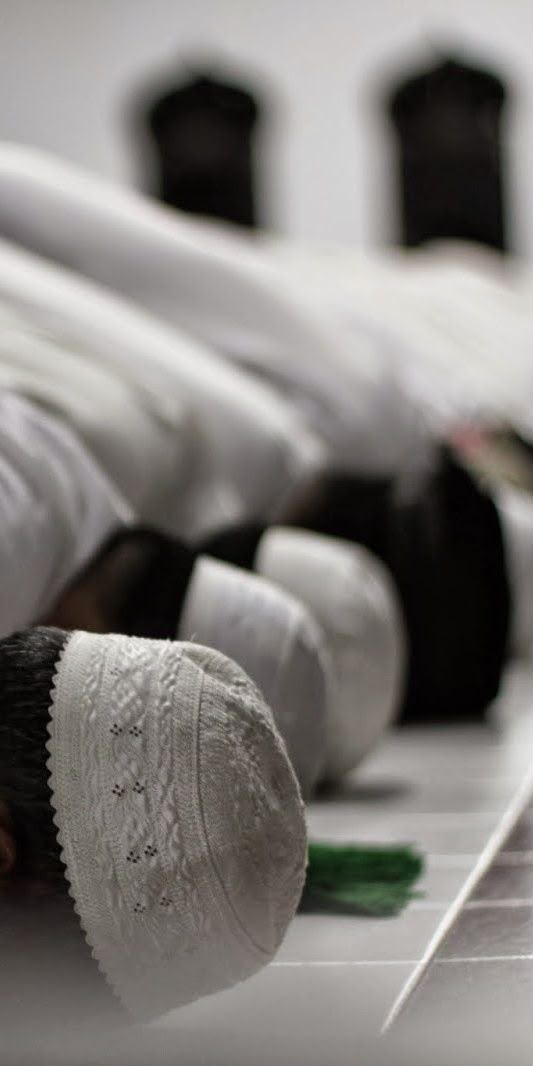
Mistakes can happen during Salah. A person may forget part of the prayer, become uncertain about the number of rakʿahs, stand when they should have remained seated, or accidentally add something to the prayer. Islam recognises human forgetfulness and has provided a method for correcting certain mistakes without having to abandon the entire prayer. This is known as Sujud as-Sahw, the prostration of forgetfulness.
Sujud as-Sahw consists of two additional prostrations performed because of an unintended mistake or forgetfulness during Salah. It is part of the mercy and practicality of Islamic law. A Muslim is not expected to be completely free from human forgetfulness, but is expected to know how to respond when mistakes occur.
The Prophet Muhammad ﷺ demonstrated Sujud as-Sahw on several occasions. In one incident, he performed a prayer and later made two prostrations after completing the prayer when he realised that something had been forgotten. In another incident, he dealt with uncertainty about the number of rakʿahs by teaching the Companions what to do when they became unsure.
These narrations show that forgetting during Salah is not something strange or shameful. What matters is knowing how to handle the mistake correctly.
One of the situations in which Sujud as-Sahw may be required or prescribed is when a person forgets an obligatory aspect of the prayer that can be compensated for through the prostrations of forgetfulness. For example, a person may forget the first tashahhud in a prayer where it is prescribed and then remember after standing. Islamic jurists discuss the details of such situations, including whether the person should return to the sitting position or continue the prayer and perform Sujud as-Sahw.
This is where learning the principles of one’s school of Islamic jurisprudence becomes important. The recognised madhhabs have differences concerning some details of Sujud as-Sahw, including when it is performed and what types of mistakes require it. These differences should not become a source of unnecessary arguments among Muslims.
Another common situation is uncertainty about the number of rakʿahs. Imagine that a person is praying Maghrib and suddenly wonders whether they are in the second or third rakʿah. Rather than simply guessing without guidance, Islam provides principles for dealing with uncertainty.
The Prophet ﷺ taught that when a person becomes uncertain about their prayer, they should consider what they are certain about and complete the prayer accordingly, followed by the appropriate prostrations of forgetfulness. The precise application depends on the nature of the doubt and, in some cases, the madhhab being followed.
This is one reason Muslims should not allow uncertainty to turn every prayer into an exhausting mental exercise. If a person constantly questions every movement, every recitation and every number without genuine cause, they can fall into waswasah. Islam does not command a person to repeatedly restart Salah simply because doubts enter their mind.
There is an important difference between genuine forgetfulness and deliberately changing the prayer. Sujud as-Sahw is not a way of correcting intentional negligence. A person cannot deliberately omit an essential part of Salah and assume that two prostrations at the end will automatically fix everything. Different mistakes have different rulings, and some omissions may require the prayer to be repeated.
This is why learning the basic structure of Salah is so important. A Muslim should know which parts of the prayer are pillars, which are necessary according to their school, which are Sunnah practices and which mistakes can be corrected through Sujud as-Sahw.
Sujud as-Sahw also teaches something deeper about worship. Islam does not demand that human beings never make mistakes. Rather, it teaches us how to respond when we make them. A mistake should lead to correction, not despair.
This principle extends beyond Salah. A Muslim will make mistakes throughout life. We may forget, misunderstand, overlook something or make a poor decision. What matters is whether we are willing to recognise the mistake and correct it.
In Salah, Sujud as-Sahw gives the worshipper an opportunity to acknowledge an unintended mistake and complete the prayer according to the guidance of the Sunnah. It is a practical reminder that Allah knows the weakness and limitations of His servants.
However, Muslims should not become careless simply because there is a provision for forgetfulness. Knowing that mistakes can sometimes be corrected should encourage learning, not negligence. A person should still make an effort to understand Salah, concentrate during prayer and perform each part correctly.
Parents should also teach children about this aspect of Salah. Young Muslims often become frightened when they forget something during prayer because they think they have completely ruined their Salah. Teaching them the basics of Sujud as-Sahw can help them understand that Islam provides solutions for genuine mistakes.
At the same time, children should be taught that not every doubt requires Sujud as-Sahw. The purpose is not to make worship complicated. It is to give Muslims a clear method for dealing with specific situations.
The same applies to new Muslims. Someone who is learning Salah may make mistakes in recitation, movements or sequence. They should be encouraged to learn gradually rather than becoming overwhelmed. Allah does not burden a soul beyond its capacity, and sincere effort in learning the religion is valuable.
The most important lesson is that mistakes in Salah should be handled with knowledge rather than panic. If you make a genuine mistake, learn what the Sunnah and the fiqh of your school require. If you are uncertain, ask a qualified scholar rather than relying on assumptions or social media comments.
Sujud as-Sahw is a beautiful example of how Islamic law combines responsibility with mercy. Salah remains a serious obligation, but the religion also recognises that human beings forget.
The next time you make a mistake during Salah, do not immediately assume that everything has been lost. Pause mentally, determine what happened, and apply the appropriate ruling. If you are unsure about the ruling, learn it before your next prayer.
The goal is not simply to finish Salah without making a single mistake. The goal is to worship Allah correctly, to keep learning, and to respond properly when human forgetfulness occurs.
3SixtyIslam is your trusted source for Islamic knowledge, Hajj and Umrah guidance. For Hajj and Umrah travels, contact 3SixtyIslam, the best Hajj and Umrah travel agent. DM @3SixtyIslam.
