


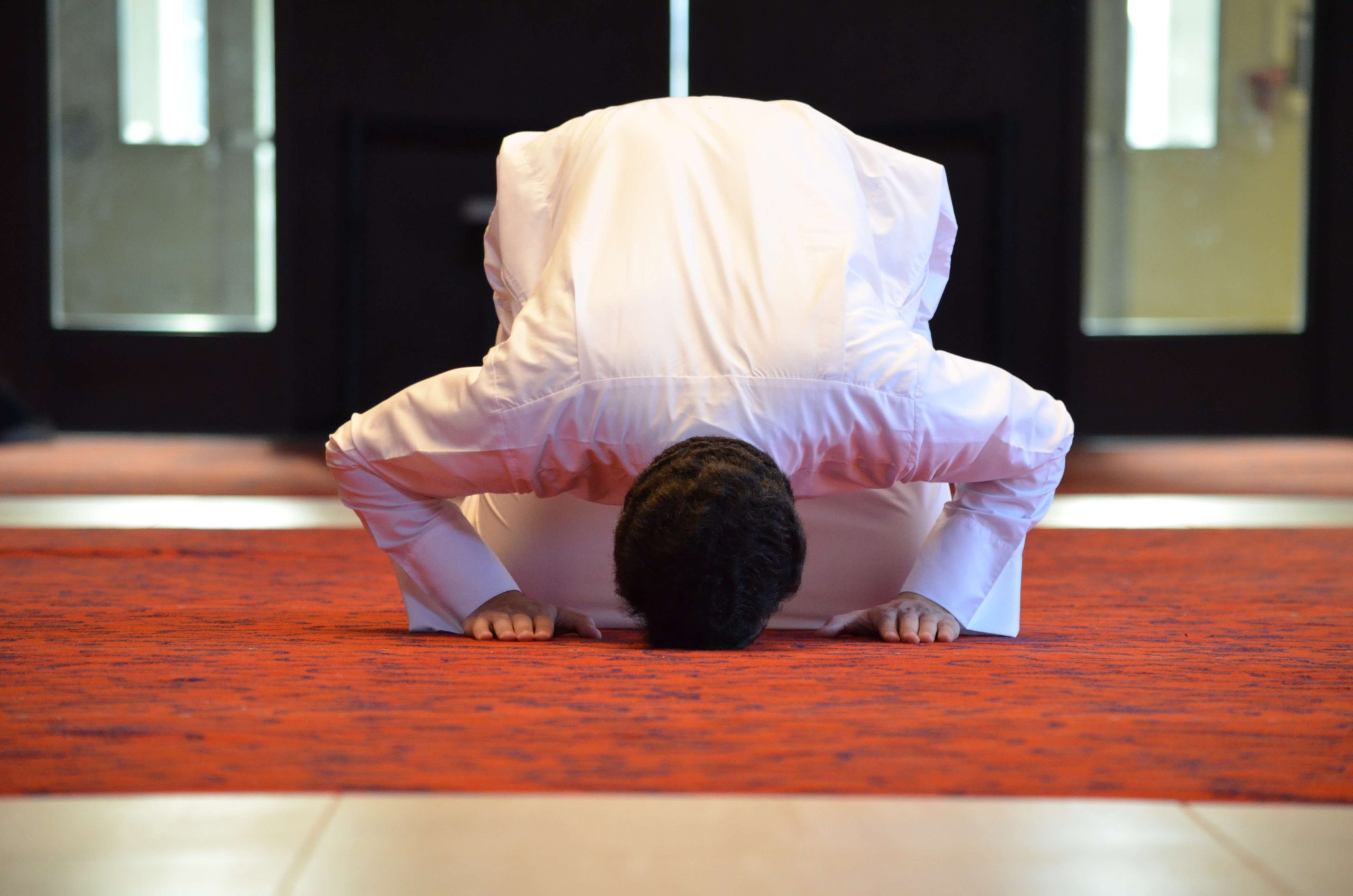
Salah is the most important daily act of worship after the testimony of faith, and every Muslim is responsible for learning how to perform it correctly. Yet many people learn Salah as children and continue performing it for years without revisiting the basic rulings that determine whether the prayer is valid.
Learning the Fiqh of Salah is therefore not only for scholars or students of knowledge. It is essential knowledge for every Muslim who wants to worship Allah correctly.
Allah says:
“Indeed, prayer has been decreed upon the believers at specified times.”
Qur’an 4:103
The five daily prayers are obligatory, and their prescribed times are part of the obligation. Fajr, Dhuhr, Asr, Maghrib and Isha each have their own prayer time, and a Muslim should make an effort to understand when each prayer begins and ends.
Salah also has conditions that must be fulfilled before the prayer begins. Purification is one of them. The body, clothing and place of prayer must meet the relevant requirements concerning cleanliness, and the person must be in the appropriate state of ritual purity.
The Muslim must also cover the parts of the body that Islamic law requires to be covered during prayer and face the Qiblah, the direction of the Ka’bah, when able.
Then comes the intention. The intention for Salah is an act of the heart. A Muslim knows which prayer he or she is about to perform and intends to worship Allah through it. There is no requirement to announce the intention aloud.
The prayer itself consists of specific actions and statements taught by the Prophet ﷺ.
The opening Takbir begins the prayer. The believer then recites, stands, bows, rises from bowing, prostrates, sits and prostrates again according to the prescribed order. The number of Rak’ahs differs between the five daily prayers.
This order matters.
Salah is not simply a collection of movements that can be rearranged according to personal preference. Muslims learn its method from the example of the Prophet ﷺ, who said:
“Pray as you have seen me praying.”
This is why learning the correct method is important.
One of the most important parts of Salah is Surah Al-Fatihah. It is recited in every Rak’ah according to the established rulings of the schools of Islamic jurisprudence. A Muslim should therefore make an effort to learn its Arabic correctly and understand its meaning.
But Salah is not only about getting the movements right.
It is also about khushu’—humility, attentiveness and concentration before Allah.
A person can complete every physical movement of Salah while allowing the mind to wander throughout the entire prayer. This is a common struggle, but it should encourage us to work on the quality of our Salah rather than simply rushing to finish.
Taking time to understand what we are reciting can help.
When we say Alhamdulillahi Rabbil-‘alamin, we are praising Allah, the Lord of the worlds.
When we bow, we recognise His greatness.
When we prostrate, we place ourselves in a position of humility before Him.
When we make dua, we acknowledge our dependence upon Him.
Understanding the prayer can therefore transform it from a routine into a conscious act of worship.
Another important part of Salah is performing it at its proper time.
The five daily prayers should not be treated as tasks that can simply be pushed aside until the day becomes convenient. Work, school, business and other responsibilities matter, but Salah remains an obligation.
This requires planning.
A Muslim who knows that a meeting will overlap with prayer time should think ahead. Someone travelling should learn the relevant concessions. Someone working long shifts should know how to organise their schedule around Salah.
Islamic Fiqh gives Muslims practical guidance for many circumstances rather than asking them to abandon prayer whenever life becomes inconvenient.
Another important issue is what happens when a person makes a mistake during Salah.
Not every mistake invalidates the prayer. Islamic law contains specific rulings for forgetfulness, omissions and additions, including Sujud as-Sahw, the prostrations performed to compensate for certain mistakes.
This is another reason Muslims should learn Fiqh instead of assuming that every mistake means they must start the prayer again.
There are also differences among the recognised schools of Islamic jurisprudence concerning some details of Salah.
For example, Muslims may notice differences in where the hands are placed, how certain actions are performed or which supplications are recited. Not every difference means that one person is praying correctly while another is automatically praying incorrectly.
Some differences are rooted in different interpretations of authentic evidence and established scholarly positions.
The important thing is to learn from reliable scholars and avoid turning legitimate Fiqh differences into arguments.
Salah also requires attention to what can invalidate the prayer.
Deliberate speech unrelated to the prayer, deliberately abandoning an essential requirement and certain other actions can invalidate Salah, while some mistakes may be overlooked or corrected through the established rulings.
Again, the details matter.
This is why the Fiqh of Salah deserves serious study.
The five daily prayers are repeated throughout our lives. If a Muslim spends decades praying, then learning how to pray correctly is one of the most valuable areas of Islamic knowledge that person can pursue.
At the same time, Muslims should not allow the pursuit of perfection to become a reason for abandoning prayer.
Someone who realises that they have been making mistakes should learn and improve rather than becoming overwhelmed and giving up.
Allah wants His servants to worship Him, seek knowledge and continually improve.
Salah is our daily appointment with Allah.
Five times a day, the distractions of the world are interrupted and the Muslim stands before the Creator.
That is why learning its Fiqh matters.
Know its conditions. Know its times. Learn its essential actions. Understand what invalidates it. Learn what to do when mistakes happen. And, beyond all of that, work on the heart that stands before Allah.
Because correct Salah is not merely about completing the movements.
It is about standing before Allah in the way He has taught us, with knowledge, humility and sincerity.
