


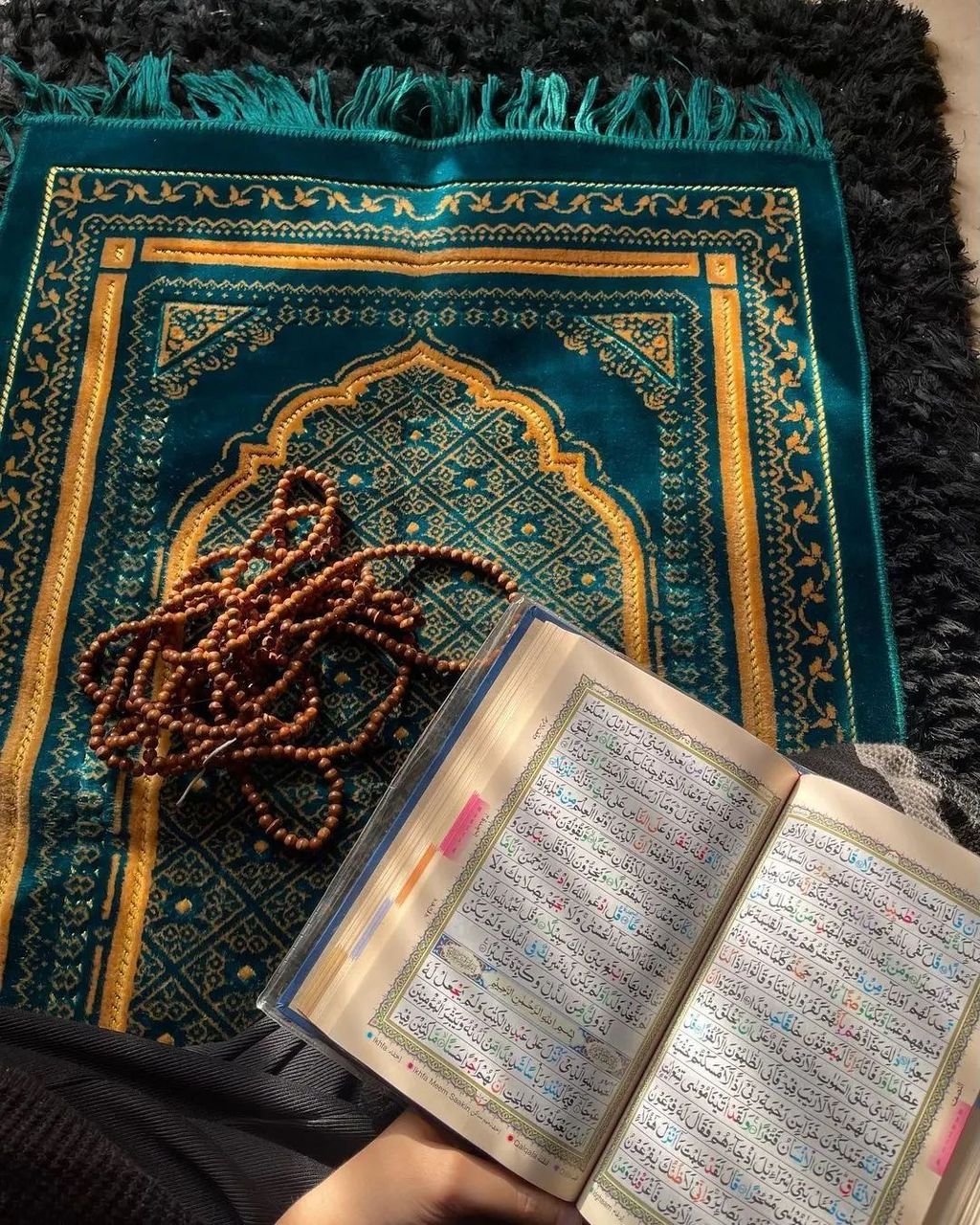
The command to remember Allah appears throughout the Qur’an, and Muslims hear it so often that it can sometimes become a phrase we recognise without fully thinking about what it means. We know that dhikr is good. We know that we should say words such as SubhanAllah, Alhamdulillah and Allahu Akbar. We know that making dhikr after salah is part of the Sunnah. But the Qur’an speaks about remembering Allah in a much broader and deeper way.
Allah says:
“Therefore remember Me. I will remember you. And be grateful to Me and do not deny Me.” (Qur’an 2:152)
It is a remarkable statement. Allah, the Creator of the heavens and the earth, tells His servants to remember Him, and then promises, “I will remember you.”
But what does it actually mean to remember Allah?
Is it simply repeating certain words with the tongue? Is it spending hours on a prayer mat? Does remembering Allah only happen during worship?
The answer is much bigger than that.
DHIKR IS MORE THAN WORDS
The Arabic word dhikr carries the meaning of remembrance. When a Muslim remembers Allah, they bring Allah to mind and keep awareness of Him present in their life.
This can certainly happen through the tongue.
When you say SubhanAllah, you are remembering Allah’s perfection. When you say Alhamdulillah, you acknowledge His blessings. When you say Allahu Akbar, you affirm His greatness. When you say Astaghfirullah, you recognise your need for His forgiveness.
But remembrance is not limited to verbal repetition.
A person can remember Allah without constantly speaking.
You remember Allah when you are about to make a decision and stop to consider whether He would be pleased with your choice. You remember Allah when you have an opportunity to cheat but choose honesty because you know He sees you. You remember Allah when you are angry and restrain yourself because you know that your response matters before Him.
This is where dhikr begins to move from the tongue into the life of a believer.
REMEMBERING ALLAH WHEN NOBODY IS WATCHING
One of the clearest signs that remembrance is becoming meaningful is what happens when nobody else is present.
It is relatively easy to behave well when people are watching. We naturally care about our reputation. We want others to think well of us.
But Islam teaches that Allah sees what people do not see.
A Muslim who remembers Allah does not need an audience before doing the right thing.
If there is money that does not belong to you, you leave it alone.
If you have the opportunity to look at something forbidden, you turn away.
If you have the opportunity to speak badly about someone who is absent, you stop yourself.
If you make a mistake and nobody knows, you still feel responsible before Allah.
This is remembrance in action.
The heart remembers Allah, and that remembrance influences the choices the person makes.
REMEMBERING ALLAH DURING ORDINARY LIFE
Another misconception is that remembering Allah requires a special environment.
Of course, there are special times for dhikr, and the Qur’an encourages believers to remember Allah frequently. But a Muslim does not have to be inside a mosque every time they want to remember their Lord.
You can remember Allah while walking.
You can remember Allah while travelling.
You can remember Allah while waiting for an appointment.
You can make dhikr while doing household work.
You can praise Allah when you receive good news.
You can turn to Allah when something worries you.
You can say Bismillah before eating and thank Him afterwards.
The goal is not to separate “Islamic moments” from the rest of your life as though Allah belongs only in certain places.
The goal is to become someone who carries awareness of Allah throughout ordinary life.
WHAT HAPPENS WHEN WE FORGET ALLAH?
The Qur’an also warns about the opposite condition.
Allah says:
“And whoever turns away from My remembrance will certainly have a miserable life.” (Qur’an 20:124)
This does not mean that every person who experiences sadness has simply failed to remember Allah. Muslims can experience grief, anxiety, disappointment, exhaustion and many other emotions.
Rather, the verse points to something deeper: a life disconnected from Allah can leave a person without the spiritual direction and grounding that come from knowing their Creator.
A person can have money and still feel empty.
They can have friends and still feel lonely.
They can achieve something they worked years for and still immediately wonder what comes next.
The human being was not created only to acquire things. There is a spiritual need that worldly achievements cannot completely satisfy.
That is why Allah says:
“Surely in the remembrance of Allah do hearts find comfort.” (Qur’an 13:28)
DHIKR DOES NOT MEAN YOU WILL NEVER HAVE PROBLEMS
This is an important distinction.
Remembering Allah does not mean that life suddenly becomes easy.
A person who makes abundant dhikr can still experience financial difficulties, family problems, disappointment, illness, loneliness or uncertainty.
The difference is that remembrance can change how a person carries those difficulties.
Instead of believing that hardship means Allah has abandoned them, they remember that Allah knows what they are experiencing.
Instead of assuming that their current situation is the whole story, they remember that Allah’s knowledge is greater than theirs.
Instead of responding to every difficulty with despair, they have a relationship with the One they can turn to.
Dhikr does not necessarily remove the storm.
Sometimes it gives the believer the strength to remain steady while passing through it.
REMEMBERING ALLAH CHANGES HOW YOU SEE BLESSINGS
Dhikr is also closely connected to gratitude.
Allah says in the same verse:
“Remember Me. I will remember you. And be grateful to Me.”
When remembrance becomes part of your life, ordinary blessings begin to look different.
You wake up and realise that being alive is a blessing.
You eat and remember that the food did not create itself.
You drink water and realise how easily life would become difficult without it.
You see your family and remember that relationships are gifts.
You have the ability to work, learn, walk, speak, see and think, and you recognise that these abilities are not things you created for yourself.
Gratitude is not merely saying Alhamdulillah when something exciting happens.
It is learning to recognise the Giver behind the gift.
REMEMBERING ALLAH WHEN YOU ARE ABOUT TO SIN
Perhaps one of the most powerful forms of dhikr is remembering Allah at the exact moment when your desires are pulling you in the opposite direction.
Imagine someone has the opportunity to do something wrong and nobody else will ever know.
The person could proceed without immediate consequences.
But then they remember Allah.
They remember that Allah sees them.
They remember that this temporary desire is not worth disobeying their Creator.
And they walk away.
That moment may contain more meaning than hundreds of words repeated without attention.
The tongue remembers Allah through dhikr, but the heart remembers Allah through obedience.
THE GOAL IS NOT JUST A BUSY TONGUE
There is nothing wrong with frequent verbal dhikr. In fact, it is something Muslims should cultivate.
But we should not reduce remembrance to counting phrases while the rest of our behaviour remains untouched.
If someone spends an hour saying SubhanAllah but then spends the next hour insulting people, lying, cheating or spreading rumours, something is missing.
The purpose of remembrance is not merely to make the tongue busy.
It is to make the heart aware.
And when the heart becomes aware of Allah, that awareness should eventually appear in a person’s character, decisions and private life.
START SMALL, BUT MAKE IT REAL
You do not need to completely transform your daily routine overnight.
Begin by making the moments you already have more meaningful.
When you wake up, remember Allah.
Before you begin something, say Bismillah with awareness rather than simply saying it automatically.
After salah, remain for a few moments and make your dhikr without rushing.
When something good happens, genuinely thank Allah.
When something worries you, turn to Allah before allowing your mind to become overwhelmed.
When you are tempted to do something wrong, remember that Allah sees you.
When you make a mistake, remember that the door of repentance is open.
Over time, these small moments can change the way a person moves through life.
“I WILL REMEMBER YOU”
Perhaps the most beautiful part of the verse is not even the command.
It is the promise.
“Remember Me. I will remember you.”
A human being can feel forgotten very easily. People can overlook you. Friends can become distant. Messages can go unanswered. Your efforts can go unnoticed.
But Allah’s remembrance is not like the remembrance of people.
The One who created you knows you completely.
He knows the things you never explain to anyone.
He knows the prayers you cannot put into words.
He knows the struggles behind your smile.
He knows the good you do when nobody notices.
And He asks you to remember Him.
So when Islam tells you to remember Allah, it is not simply asking you to repeat phrases throughout the day.
It is calling you to build a relationship with your Creator in which Allah remains present in your thoughts, your choices, your gratitude, your worship and your private life.
That is when dhikr becomes more than words.
It becomes a way of living.
