


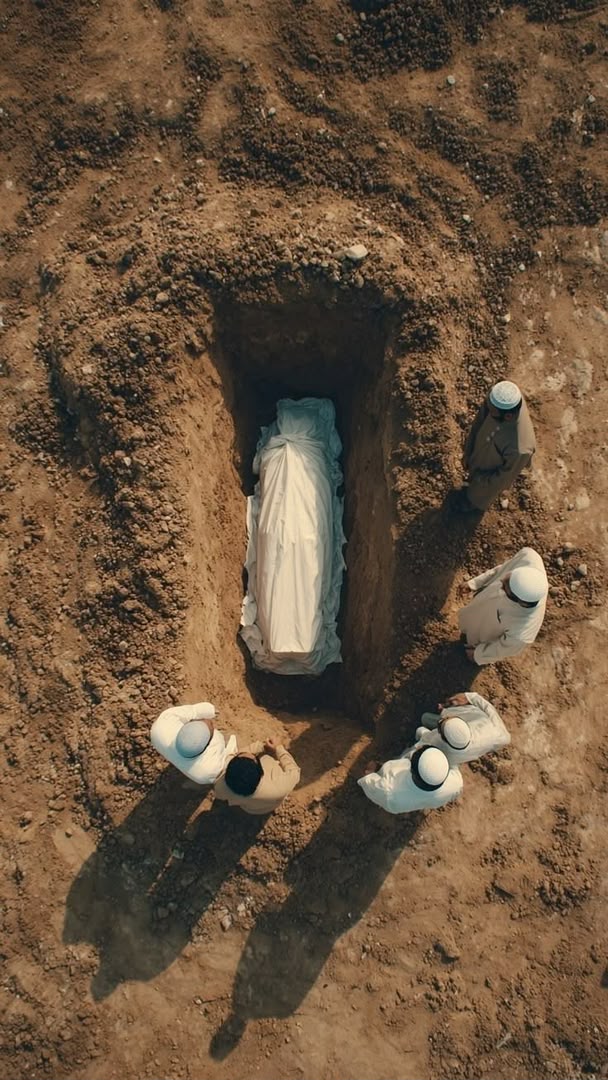
Visiting the grave of someone you love can be one of the most emotional experiences a person can have. You stand beside the place where someone you once spoke to, laughed with, prayed with or depended on is now buried. You may find yourself wondering whether they know you have come. Do they hear your greeting? Do they know who is standing beside their grave? Can they hear the words you say?
Islam gives us guidance about the unseen world, but it also teaches us to be careful. There are matters concerning the life after death that Allah has revealed to us, and there are matters about which we simply do not have enough knowledge to speak with certainty.
What we do know is that visiting graves is not meaningless. The Prophet Muhammad ﷺ encouraged Muslims to visit graves because they remind us of death and the Hereafter. He also taught Muslims what to say when visiting them.
When a Muslim enters a graveyard, they are encouraged to greet its inhabitants and ask Allah to grant them peace and well-being. The Prophet ﷺ taught his Companions to say, in meaning, that peace be upon the inhabitants of the believing people of these dwellings, and that Allah would have mercy on those who went before and those who come later.
That alone tells us something important: the Muslim is not simply visiting a piece of land. They are visiting people who have entered another stage of existence.
CAN THE DEAD HEAR US?
This is where the subject requires some care.
There are authentic narrations indicating that the dead can hear in particular circumstances. For example, after the Battle of Badr, the Prophet ﷺ addressed some of the slain opponents of Islam. When asked whether they could hear him, he indicated that they could hear what he was saying, although they were unable to respond.
There is also the well-known narration in which the Prophet ﷺ taught that when a person leaves the graveyard after burial, the deceased hears the footsteps of those who leave.
These narrations establish that hearing by the dead is possible in ways Allah has permitted.
However, this does not mean that we should assume that every deceased person hears everything said around their grave at all times. The unseen cannot be understood simply by applying the rules of worldly life to it.
Allah knows the reality of what the deceased hear and when they hear it.
That distinction is important.
DO THEY KNOW WHO VISITS THEM?
There are scholarly discussions concerning whether the deceased recognise specific people who visit them and whether they are aware of every visit.
Some scholars have held that the deceased may recognise those who visit them, while others have been more cautious about specifying exactly how this awareness occurs. There are reports and scholarly interpretations on the matter, but Muslims should distinguish between what is firmly established and what remains part of scholarly discussion.
What is certain is that visiting graves is a Sunnah and that Muslims are instructed to greet the people of the graves and make du’a for them.
So you do not need to know every detail of the unseen before visiting someone you have lost.
You can simply follow what the Prophet ﷺ taught.
WHAT SHOULD YOU DO WHEN YOU VISIT A GRAVE?
The purpose of the visit should not be to communicate with the deceased as though they are still living among us.
Instead, the visitor should remember death, greet the inhabitants of the grave and make du’a to Allah for them.
You can ask Allah to forgive the deceased, have mercy upon them, pardon their shortcomings and grant them a good position in the Hereafter.
This is where the focus of the visit becomes clear.
You are not going to the grave to ask the dead for what only Allah can give. You are going to remember the Hereafter and ask Allah to help the person who has passed away.
That distinction is fundamental to Islamic belief.
YOUR DU’A CAN STILL BENEFIT SOMEONE WHO HAS DIED
Death does not mean that you can no longer do anything beneficial for someone you love.
The Prophet ﷺ taught that when a person dies, their deeds come to an end except for three: ongoing charity, beneficial knowledge and a righteous child who prays for them.
The wider teachings of Islam also establish that supplication for the deceased is beneficial.
This means that instead of standing at someone’s grave only remembering what you have lost, you can turn that grief into an act of worship.
You can ask Allah to forgive them.
You can give charity on their behalf where permissible.
You can fulfil legitimate obligations connected to their estate.
You can maintain good relationships with the people they loved.
And you can continue making sincere du’a for them.
THE GRAVE CAN TEACH THE LIVING SOMETHING
There is another side to visiting graves that is sometimes overlooked.
The person in the grave is not the only one who needs to be remembered.
The visitor needs the reminder too.
You may arrive thinking about the person who died and leave thinking about your own life.
One day, someone else may stand beside your grave.
The clothes you own will remain behind. The phone you use every day will belong to someone else. The money in your account will pass into other hands. Your position, title and reputation will eventually become part of history.
What follows you is what you sent ahead.
That is why the Prophet ﷺ connected visiting graves with remembering the Hereafter.
A graveyard has a way of putting worldly concerns into their proper place.
DO NOT TURN GRIEF INTO SUPERSTITION
When people lose someone they love, grief can make them vulnerable to claims about the unseen.
Someone may say, “The deceased came to me in a dream, so this definitely means they are asking for something.”
Another person may claim, “Your dead relative is watching everything you do.”
Someone else may say, “They came to tell you that they are suffering.”
We should be careful with statements like these.
Dreams can be meaningful experiences, but they are not a reliable source for establishing beliefs about the unseen or religious obligations. A person should not build matters of creed and worship on claims that Allah and His Messenger ﷺ have not established.
The safest approach is to stay with what Islam has actually taught.
Make du’a.
Give charity where appropriate.
Visit the graves respectfully.
Remember death.
And leave the unseen to Allah.
SOMEDAY, WE WILL BE THE ONES IN THE GRAVE
Perhaps the most powerful lesson is not whether the deceased know exactly when we visit them.
It is that every visitor eventually becomes one of those being visited.
Today you stand beside a grave and make du’a for someone else.
Tomorrow, you may be the one whose name is written on a grave.
That reality should not make us hopeless. It should make us purposeful.
There is still time to repent.
There is still time to repair relationships.
There is still time to pray with sincerity.
There is still time to give charity.
There is still time to learn.
There is still time to become the Muslim we keep saying we want to become.
The grave is a reminder that our opportunity to prepare for the Hereafter is limited.
So when you next visit someone you have lost, remember them with mercy, make du’a for them and allow the visit to remind you of your own return to Allah.
Because eventually, every one of us will make that journey.
And when our turn comes, what will matter is not who came to visit our grave, but what we sent ahead of us before we arrived there.
