


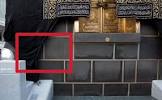
Among the most emotional and beloved places around the Kaaba for many pilgrims is the area known as the Multazam. It is a place where hearts soften, tears flow, and sincere duas are raised with deep hope.
For countless visitors to the Sacred Mosque in Makkah, standing at the Multazam becomes one of the most memorable moments of their journey.
Yet many pilgrims know the name without fully understanding what it is, why it is significant, and how to approach it correctly.
WHAT IS THE MULTAZAM
The Multazam is the area of the Kaaba located between the Black Stone and the door of the Kaaba.
It is a relatively small section of the wall, but one that carries special emotional significance in the hearts of pilgrims.
The word Multazam comes from the meaning of clinging firmly or holding closely. This is because people traditionally press themselves against this area while making dua, seeking nearness to Allah with humility and desperation.
It is a place associated with pleading, hope, repentance, and personal supplication.
WHY PILGRIMS ARE DRAWN TO IT
There are places where worship feels especially intimate, and for many believers, the Multazam is one of them.
Standing there, touching the wall of the Kaaba, and asking Allah sincerely can feel overwhelming. Pilgrims often make dua for matters they have carried for years:
* Forgiveness for sins
* Marriage
* Children
* Healing
* Rizq
* Relief from hardship
* Guidance
* Acceptance of Hajj or Umrah
* A good ending in life
Because of this, the Multazam is often filled with emotion and sincerity.
A PLACE OF HUMILITY, NOT SUPERSTITION
The Multazam is honored because of its connection to the Kaaba and the tradition of making dua there.
It should never be treated as though the wall itself grants requests. Allah alone answers prayers.
The place is special because it encourages humility, devotion, and heartfelt turning to Allah.
A believer does not worship a location. A believer worships the Lord of the location.
WHEN TO VISIT THE MULTAZAM
Pilgrims often try to reach the Multazam during Umrah or after Tawaf when movement around the Kaaba allows it.
However, due to crowd management, security flow, and large numbers of visitors, access is not always easy or practical.
At some times it may be nearly impossible without causing hardship.
This is why wisdom and patience are essential.
THE BEST WAY TO APPROACH IT
COME WITH THE RIGHT INTENTION
Do not approach it as a tourist checkpoint or social media moment.
Come with sincerity, humility, and genuine need before Allah.
PREPARE YOUR DUA BEFOREHAND
Because time there may be short, know what you want to ask.
Write down or mentally prepare your most important duas:
* For your deen
* For your family
* For forgiveness
* For your future
* For the Ummah
A prepared heart benefits more than an unprepared crowd.
GO AT QUIETER TIMES
Late night or less congested hours may provide better opportunities than peak prayer times or rush periods.
If it is too crowded, wait or return later.
BE PATIENT AND GENTLE
This is critical.
Do not push, elbow, shout, or fight others for access.
Hurting another Muslim while trying to make dua at a blessed place contradicts the purpose of being there.
Gentleness is worship too.
KEEP IT BRIEF IF OTHERS ARE WAITING
If you are able to reach the area during crowded conditions, make concise heartfelt dua and allow space for others.
Respect and consideration are part of adab.
IF YOU CANNOT REACH IT
Many pilgrims feel disappointed if they cannot access the Multazam.
There is no need.
Allah is not limited to one place. He hears your dua wherever you are in the Sacred Mosque, in your hotel room, on the plain of Arafah, in Mina, or in your home after returning.
Sometimes the dua made from a distant corner with sincerity may be greater than the dua made at the wall with distraction.
IMPORTANT SAFETY ADVICE FOR PILGRIMS
Elderly pilgrims, those with health conditions, women with vulnerable companions, and anyone sensitive to intense crowd pressure should be cautious.
No recommended act should place your health or safety at risk.
Protecting life and avoiding harm takes priority.
COMMON MISUNDERSTANDINGS
Some think touching the Multazam is required for Hajj or Umrah.
It is not.
Some think duas are only accepted there.
They are not.
Some think reaching it proves spiritual status.
It does not.
Acceptance with Allah is based on sincerity, taqwa, and obedience, not proximity to a wall.
SPIRITUAL LESSONS OF THE MULTAZAM
The Multazam teaches something powerful.
Human beings need a place to humble themselves, cry, and admit dependence on Allah.
Many people carry burdens privately. At the Multazam, those burdens are poured out before the One who can remove them.
It reminds us that strength is not pretending to need nothing.
Strength is knowing exactly who to turn to.
FINAL THOUGHTS
The Multazam is one of the most beloved places around the Kaaba because it gathers longing, repentance, hope, and tears into one moment of worship.
If Allah grants you access, approach it with gratitude and sincerity.
If He does not, remain content and make dua wherever you are.
Because the true miracle is not touching a sacred wall.
The true miracle is a heart that turns sincerely to Allah and is answered.
