

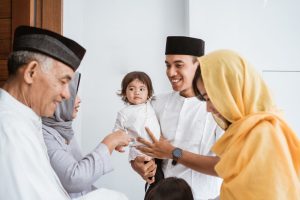
In Islam, the status of parents is second only to that of Allah ﷻ. After the command to worship Him alone, Allah immediately reminds us of our duty toward our parents. This shows how sacred, honored, and weighty the rights of parents are in the life of every Muslim.
THE DIVINE COMMAND TO HONOR PARENTS
Allah ﷻ says in the Qur’an:
“And your Lord has decreed that you worship none but Him, and that you be kind to your parents. Whether one or both of them attain old age in your life, say not to them a word of disrespect, nor repel them, but address them in terms of honor.”
Surah Al-Isra (17:23)
This verse beautifully links Tawheed (the oneness of Allah) with Birr al-Walidayn (kindness to parents), emphasizing that serving one’s parents is not a cultural duty it is a religious obligation.
Even the smallest act of disrespect, such as saying “uff,” is prohibited. This highlights the level of gentleness and patience Islam expects in our interactions with parents.
WHEN PARENTS GROW OLD
Caring for parents in their old age is a test of one’s character and faith. When the roles reverse, and the child becomes the caregiver, it is a sacred opportunity to earn immense reward.
The Prophet ﷺ said:
“May he be disgraced, may he be disgraced, may he be disgraced the one whose parents, one or both of them, reach old age during his lifetime and he does not enter Paradise (by serving them).”
Muslim
Serving aging parents is not a burden it is a door to Jannah. The way we treat them in their weakness is a reflection of our gratitude for the countless sacrifices they made in our childhood.
THE MOTHER’S UNIQUE STATUS
While both parents have great rights, the mother holds a special place in Islam because of her immense struggles in pregnancy, childbirth, and nurturing.
A man once asked the Prophet ﷺ, “Who is most deserving of my good company?”
The Prophet ﷺ replied:
“Your mother.”
He asked again, “Then who?”
“Your mother.”
He asked once more, “Then who?”
“Your mother.”
He said, “Then who?”
“Your father.”
Bukhari and Muslim
The repetition shows that a mother’s sacrifices physical, emotional, and spiritual are unmatched. Yet, honoring one’s father is also a critical part of righteousness, as he provides protection, guidance, and sustenance.
WHEN PARENTS ARE NON-MUSLIM OR UNJUST
Even when parents are not Muslim or behave unjustly, Islam still commands us to maintain kindness and respect.
Allah ﷻ says:
“But if they strive to make you associate with Me that of which you have no knowledge, then do not obey them, but accompany them in this world with kindness.”
Surah Luqman (31:15)
Obedience is not absolute it stops where disobedience to Allah begins. However, love, respect, and good treatment remain obligatory at all times.
The believer never stops making dua for their parents, whether they are alive or have passed away. The Qur’an teaches us a beautiful supplication:
“My Lord, have mercy upon them as they brought me up when I was small.”
Surah Al-Isra (17:24)
This dua reflects gratitude and humility a reminder that our existence, comfort, and success are built upon their sacrifices.
CONCLUSION
The rights of parents are sacred. Honoring them is worship, serving them is charity, and praying for them is ongoing reward. They are our path to Allah’s mercy and our gate to Paradise.
So long as they are alive, treat them with gentleness and love. And when they are gone, honor them with dua, charity, and living by the values they taught you.
“Paradise lies beneath the feet of your mother.”
Ahmad and An-Nasa’i
To please your parents sincerely for the sake of Allah is to walk the path to Jannah itself.
