


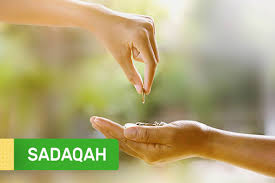
When people hear the word sadaqah, they often think about money. They imagine giving cash to someone in need, donating to a mosque, supporting an orphanage or contributing to a charitable cause. These are all valuable forms of giving, but sadaqah is much bigger than the money that leaves your hand.
Islam teaches a person to become a source of benefit.
Sometimes that benefit comes through money. Sometimes it comes through food, knowledge, time, effort, a kind word, a genuine favour or simply making life easier for another person. The beauty of sadaqah is that it turns ordinary opportunities into acts of worship.
The Prophet Muhammad ﷺ taught that every act of kindness is charity. This means a Muslim does not need to be wealthy before they can become generous.
You can give something even when you do not have much.
SADAQAH IS NOT ONLY FOR RICH PEOPLE
One of the misconceptions surrounding charity is that meaningful giving belongs to people with plenty of money.
Someone may look at their bank account and think, “I am not rich enough to give.”
But Islam does not define generosity by wealth alone.
A person with little can give little and still have an enormous reward because Allah looks at sincerity, sacrifice and intention.
A small amount given sincerely can mean more to Allah than a large donation given for recognition.
The important thing is to develop the heart of a giver.
When you receive something, think about who else could benefit from it. When you have an opportunity to help, do not immediately assume that someone wealthier should handle it. When Allah gives you the ability to make another person’s situation easier, recognise that ability as a blessing itself.
SOMETIMES THE BEST SADAQAH IS THE ONE NOBODY KNOWS ABOUT
There is something beautiful about giving privately.
When nobody knows what you gave, there is no applause to receive. There is no reputation to build and no social media post to make.
It is simply you, the person receiving the help and Allah.
The Qur’an praises those who spend their wealth sincerely, and Islam repeatedly warns against allowing charity to become a means of showing off or reminding people of what you have done for them.
This is why Muslims should be careful with the desire to document every act of generosity.
Not everything good needs an audience.
Some of your most valuable deeds may be the ones that never appear anywhere online.
GIVE WITHOUT TAKING AWAY SOMEONE’S DIGNITY
How you give can matter almost as much as what you give.
A person who needs help is already in a vulnerable position. The last thing they need is to be publicly embarrassed while receiving it.
Islam places enormous value on human dignity.
If you are helping someone, there is no need to make them feel inferior. Do not announce their situation to people who do not need to know. Do not use their hardship as content. Do not remind them repeatedly that you helped them.
Allah warns believers against nullifying their charity through reminders and hurtful behaviour.
This is a powerful lesson.
You can give someone money and still hurt them.
You can provide food and still humiliate them.
You can solve someone’s problem and still destroy the beauty of your deed through arrogance.
True sadaqah should lift people, not make them feel beneath you.
NOT EVERYTHING YOU GIVE HAS TO BE MONEY
Perhaps one of the most beautiful aspects of Islamic charity is that generosity is not restricted to the wealthy.
You can give your time to someone who needs help.
You can teach someone a skill.
You can share useful knowledge.
You can help an elderly person carry something.
You can make room for someone.
You can visit a person who is lonely.
You can guide someone who is lost.
You can remove something harmful from a person’s path.
You can speak a kind word to someone who is having a difficult day.
These things may not look like traditional charity, but they can still carry the spirit of sadaqah.
The Prophet ﷺ taught that a smile is charity. That alone should change the way we think about giving.
SOMETIMES PEOPLE NEED YOUR TIME MORE THAN YOUR MONEY
There are people who are financially struggling, but there are also people struggling in ways money cannot solve.
Someone may need a listening ear.
Someone may need advice.
Someone may need help filling out a form.
Someone may need a ride.
Someone may need someone to check on them.
Someone may simply need to know that somebody cares.
In such situations, giving money may be useful, but giving your time may be even more meaningful.
Our busy lives can make time feel more valuable than money. When you deliberately give someone your attention, you are giving them something you cannot recover.
That can be a powerful form of generosity.
DO NOT WAIT UNTIL YOU HAVE “ENOUGH”
Many people postpone generosity.
“I will start giving when I earn more.”
“I will donate when my business becomes successful.”
“I will help people when I have enough savings.”
But there will always be another financial goal.
There will always be another bill.
There will always be something you could spend the money on.
If generosity is always waiting for the perfect financial moment, that moment may never come.
Start with what you can genuinely afford.
It does not have to be dramatic.
A small, consistent act of charity can become part of your life rather than something you only remember when there is a major fundraising campaign.
SADAQAH CAN CHANGE THE WAY YOU SEE YOUR WEALTH
When you regularly give, something changes inside you.
You begin to understand that wealth is not simply something you possess.
It is something Allah has entrusted to you.
The food in your house, the money in your account, the clothes you wear, the skills you have and even the time available to you are all blessings.
Giving reminds you that you are not merely a consumer.
You can become a means through which Allah helps someone else.
Perhaps the money you give pays for someone’s meal.
Perhaps the food you provide feeds a family.
Perhaps the school fees you help with keep a child in class.
Perhaps the small amount you give helps someone get through a difficult day.
You may never know the full effect of what you gave.
That is part of the beauty of charity.
GIVE WITHOUT EXPECTING PEOPLE TO REMEMBER YOU
One of the dangers of giving is expecting gratitude in return.
You help someone and expect them to appreciate you forever.
You lend money and expect special treatment.
You support someone and become disappointed when they do not mention your contribution.
But charity is ultimately between you and Allah.
People may forget.
They may fail to say thank you.
They may not realise how much you sacrificed.
They may never understand what it cost you to help them.
Do not let that destroy your sincerity.
If your reward was with Allah from the beginning, people’s reactions do not determine whether your deed was valuable.
THERE ARE PEOPLE AROUND US WHO NEED HELP QUIETLY
Not everyone who needs help will ask.
Some people are too proud.
Some are embarrassed.
Some have been disappointed before.
Some are trying desperately to maintain their dignity.
This is why generosity requires awareness.
Look around you.
Perhaps there is a relative struggling quietly.
Perhaps an elderly neighbour needs assistance.
Perhaps someone who works around you is dealing with a financial problem.
Perhaps a friend who always says “I am fine” is actually not fine.
Being generous is not only about responding when someone stretches out their hand.
Sometimes it means noticing the hand that never gets stretched out.
SADAQAH DOES SOMETHING TO THE GIVER TOO
We often focus on what charity does for the recipient, but giving also changes the person who gives.
It teaches gratitude.
It weakens attachment to possessions.
It reminds us that wealth can disappear.
It develops compassion.
It makes us more aware of other people’s struggles.
And it protects us from believing that everything we possess is purely the result of our own ability.
The more a person gives sincerely, the easier it can become to understand that provision is ultimately from Allah.
This does not mean Muslims should be financially irresponsible. Islam encourages responsible spending, fulfilling obligations and taking care of those under our responsibility. But within that responsibility, there should also be room for generosity.
ASK YOURSELF WHAT KIND OF PERSON YOU WANT TO BE
At the end of the day, sadaqah is not just about how much money you give.
It is about the kind of person you are becoming.
Are you becoming someone who notices when others need help?
Are you becoming someone who shares?
Are you becoming someone who protects the dignity of people you help?
Are you becoming someone who gives even when nobody is watching?
Are you becoming someone whose presence makes life easier for others?
The Prophet ﷺ taught Muslims to be beneficial to others, and that principle gives sadaqah a much wider meaning.
Your wealth can help someone.
Your knowledge can help someone.
Your strength can help someone.
Your time can help someone.
Your words can help someone.
Even your presence can help someone.
NEVER THINK YOUR GIVING IS TOO SMALL
You may not be able to build a mosque.
You may not be able to sponsor hundreds of students.
You may not be able to feed an entire community.
But perhaps you can feed one person.
Perhaps you can buy someone’s meal.
Perhaps you can give a little money.
Perhaps you can help someone get home.
Perhaps you can teach someone something useful.
Perhaps you can simply make someone’s difficult day a little easier.
Do not underestimate small good deeds.
The Prophet ﷺ taught that deeds most beloved to Allah are those that are consistent, even if they are small.
So give according to your ability.
Give sincerely.
Give with dignity.
Give without humiliating.
Give without constantly reminding people.
And give knowing that the One who sees what leaves your hand also knows what remains in your heart.
Sometimes you may think you are giving something away.
In reality, you may be investing in something that will remain with you long after the money itself is gone.
