


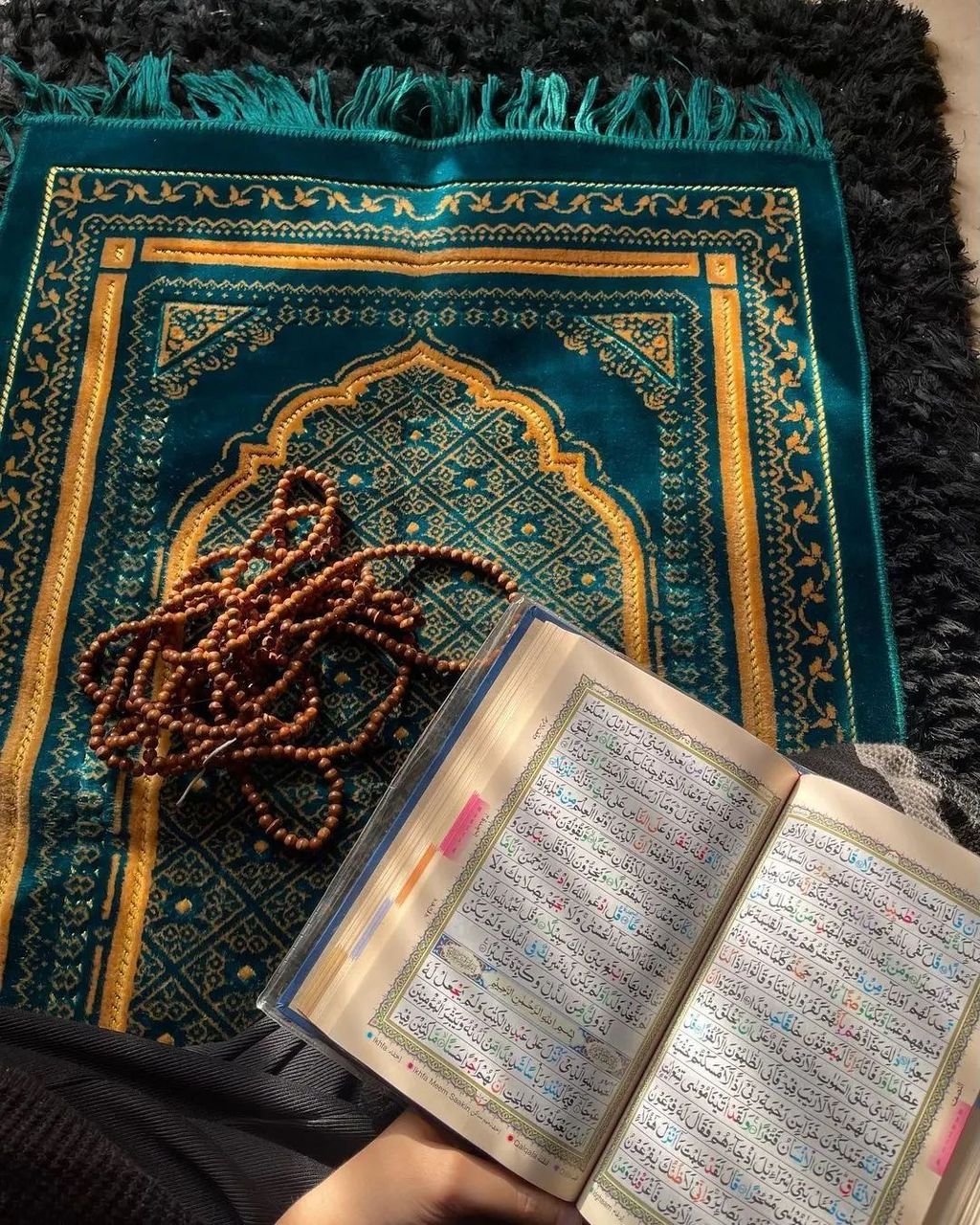
There is a difference between praying because you know you have to and praying because your heart genuinely wants to stand before Allah. Both may involve the same movements, the same words and the same five daily prayers, but the experience can feel completely different.
For some Muslims, Salah has slowly become something they rush through. They hear the adhan, check the time, make wudu and pray because they know it is obligatory. Once the prayer is finished, they immediately return to work, their phones, conversations, errands and everything else waiting for them.
There is nothing wrong with fulfilling an obligation. In fact, fulfilling the obligation of Salah is essential. But there is another level of prayer that comes when a person begins to understand what it means to stand before Allah.
Sometimes the problem is not that we do not care about Salah. The problem is that we have become too familiar with it.
We have prayed so many times that we can recite the words without thinking about them. We know exactly when to bow, when to stand and when to prostrate. The body knows what to do, but the heart can sometimes be somewhere completely different.
The good news is that a person can rebuild that connection.
Falling in love with Salah does not happen by forcing yourself to manufacture emotions. It begins by understanding what Salah actually is.
Salah is an opportunity to step away from the world and turn towards Allah.
Think about how much of your day is controlled by demands. Someone needs an answer from you. Someone sends you a message. There is work to complete. Bills need to be paid. Family needs your attention. Your phone keeps buzzing. Your mind is thinking about tomorrow while your body is dealing with today.
Then the time for Salah arrives.
For a few minutes, you leave all of that behind.
You stand before the One who created you.
That perspective can change the way you approach prayer.
Instead of seeing Salah as another interruption to your schedule, begin seeing it as the moment that gives your schedule perspective. The world does not disappear when you pray, but you are reminded that the world is not your ultimate destination.
Allah says, “Establish prayer for My remembrance.” (Qur’an 20:14).
At the heart of Salah is remembrance.
It is a return.
Every prayer gives you another opportunity to remember who you are, who your Creator is and what your life is ultimately about.
This is especially important when life is going well.
When everything is working, people can easily become distracted. A good salary, a successful business, a comfortable home, family responsibilities and personal ambitions can consume so much attention that a person slowly becomes less conscious of Allah.
Salah interrupts that distraction.
And when life is difficult, Salah becomes even more important.
You may walk into prayer carrying anxiety about your finances, disappointment about your career, problems in your marriage, worries about your children or uncertainty about your future. You may not have an immediate solution to any of those problems.
But you can still stand before Allah.
You can still make sujud.
You can still ask Him for help.
There is a reason the believer is repeatedly invited back to Salah throughout the day. We need those moments of reconnection.
One of the best ways to improve your prayer is to slow down enough to understand what you are saying.
Many Muslims know the Arabic words of Salah but do not know their meanings deeply. This can make prayer feel repetitive.
Start with Al-Fatihah.
When you say, “All praise is for Allah, Lord of the worlds,” you are praising the One who created and sustains everything.
When you say, “The Most Compassionate, Most Merciful,” you are reminding yourself of Allah’s mercy.
When you ask Allah to guide you to the straight path, you are making one of the most important requests a human being can make.
You are not simply reciting familiar Arabic phrases.
You are asking Allah for guidance.
Once you understand the meanings, the prayer begins to feel different.
The same applies to the words you say in ruku’ and sujud. You are glorifying Allah. You are acknowledging His greatness. In sujud, you are in a position of humility before your Creator.
The Prophet ﷺ said, “The closest that a servant is to his Lord is when he is prostrating.” This should change how we view sujud.
Sujud is not something to rush through because we are eager to finish the prayer.
It is one of the most intimate moments of worship.
When your forehead is on the ground, you have voluntarily placed yourself in a position of complete humility before Allah. You can praise Him, ask Him for forgiveness and make du’a.
Imagine treating that moment as something precious rather than something to get through quickly.
Another way to reconnect with Salah is to stop expecting perfect concentration.
Many people become discouraged because their minds wander during prayer. They begin thinking about work, food, family, money, messages or something that happened earlier in the day.
Then they become frustrated with themselves.
But having distractions does not mean you should stop trying.
When you notice that your mind has wandered, gently bring it back.
Then it wanders again.
Bring it back again.
This is part of the struggle.
Khushūʿ is not achieved by demanding that your mind never wander. It involves developing humility, awareness and concentration while continually returning your attention to Allah.
Your phone can make this particularly difficult.
We have become accustomed to constant stimulation. A few seconds of silence can feel uncomfortable. We check notifications while waiting for something, scroll while eating and reach for our phones whenever there is nothing immediately demanding our attention.
Then we stand for Salah and expect our minds to become completely still.
That takes practice.
Try creating a small transition between your everyday life and Salah. Put the phone away. Stop what you are doing. Make wudu without rushing. Take a moment before the prayer begins to remind yourself that you are about to stand before Allah.
You do not need a dramatic spiritual experience.
You simply need to become present.
Another important step is to stop treating Salah as something that only matters when you are feeling religious.
There will be days when you feel spiritually strong.
There will also be days when you feel tired, distracted, frustrated or distant.
Pray anyway.
Your relationship with Allah cannot depend entirely on your emotions.
Sometimes you pray because your heart is full of gratitude. Sometimes you pray because you are hurting. Sometimes you pray because you feel nothing particularly special at all.
All of those days matter.
Consistency teaches the heart to return to Allah regardless of its mood.
And then something beautiful can happen.
The prayer that once felt like a responsibility can gradually become a source of comfort.
You begin to miss it when you are away from it.
You begin to notice the difference between praying in a hurry and praying with calmness.
You begin to appreciate the silence before Fajr. You begin to look forward to the moment of sujud. You begin to understand why the Prophet ﷺ found comfort in prayer.
This does not happen overnight.
Just as a relationship between two people grows through time spent together, your relationship with Allah grows through sincere worship, remembrance and obedience.
Do not wait until you feel that connection before taking Salah seriously.
Taking Salah seriously is part of how you develop that connection.
There is also something powerful about praying when nobody is impressed by it.
Your Salah may never receive applause. Nobody may know how many times you stood at night. Nobody may know how many prayers you made while struggling with something privately.
But Allah knows.
That is enough.
A prayer that nobody sees can be more valuable to your heart than a public display that attracts attention.
So if your Salah has become routine, do not conclude that you have lost your faith.
Perhaps you simply need to reconnect with what you are doing.
Learn the meanings. Slow down. Protect your prayer from unnecessary distractions. Think about who you are standing before. Take your sujud seriously. Make du’a. Give yourself time to develop khushūʿ.
And most importantly, keep showing up.
There will be prayers where you feel deeply connected and prayers where your mind wanders constantly. There will be days when Salah feels peaceful and days when it feels difficult.
Do not measure your entire relationship with Allah by one prayer.
Keep returning.
The five daily prayers are not five burdens placed into your day to make life harder. They are five opportunities to step away from the noise and remember the One who gave you the day in the first place.
Your work matters.
Your family matters.
Your ambitions matter.
Your responsibilities matter.
But none of them should become so important that you forget the One who gave you the ability to pursue them.
Perhaps the way to fall in love with Salah again is not to ask, “How can I finish my prayer faster?”
Perhaps it is to ask yourself whether you have truly understood what happens when you stand before Allah.
Once you begin to understand that, Salah stops being merely something you have to do.
It becomes something you need.
And when you reach that point, you no longer see the five daily prayers as interruptions to your life.
You begin to see them as some of the most important moments of it.
