
The Muslim Rights Concern (MURIC) has called on the Federal Government of Nigeria to revoke the recently signed health agreement between Nigeria and the United States, describing it as discriminatory, divisive, and tilted in favour of Christians.
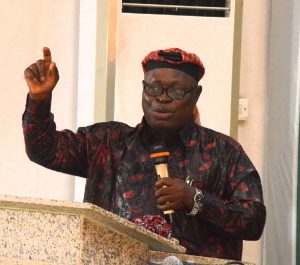
The organisation made this demand in a statement issued on Tuesday, 23 December 2025, and signed by its Executive Director, Professor Ishaq Akintola. According to MURIC, the agreement, reportedly valued at $2.1 billion, is structured to promote healthcare delivery for Christian institutions, a move it says violates the constitutional principle of equality among all citizens.
MURIC argued that the pact unfairly marginalises Muslims, noting that Nigeria is expected to contribute $3.0 billion—representing about 58.82 per cent of the total $5.1 billion funding—despite the project allegedly serving only one religious group. The group described this arrangement as unjust, stressing that public funds derived from taxpayers of all faiths should not be used to benefit a single religious community.
The statement questioned the rationale behind committing collective national resources to what it termed a faith-specific healthcare scheme, pointing out that Nigeria operates a unified tax system and common national institutions without religious segregation.
MURIC warned that allowing such an agreement to stand could set a dangerous precedent, potentially leading to the compartmentalisation of public infrastructure along religious lines. It described the development as inconsistent with good governance and national unity.
While acknowledging the government’s long-standing role in providing joint healthcare services for all Nigerians regardless of faith, MURIC insisted that fairness demands parity if a religiously defined healthcare project is introduced. It therefore urged the Federal Government to either revoke the US health pact entirely or simultaneously establish a parallel healthcare project of equal standard for Muslims, to commence and progress alongside the existing one.
The organisation further cautioned that proceeding with the agreement without addressing Muslim concerns could attract legal, political, and parliamentary challenges. It maintained that revocation of the pact remains the best option to preserve equity and social harmony.
MURIC also expressed broader concerns about what it described as a historical imbalance in Nigeria’s socio-political structure, alleging that Muslim demands in areas such as Islamic banking, shari’ah, sukuk, and halal investment have often faced resistance, while Christian interests receive favourable attention.
Despite its strong criticism, the group appealed to Muslims across the country to remain calm, peaceful, and law-abiding. It emphasised that patience, civility, and good conduct are essential, assuring Muslims that their grievances have been clearly articulated and will not be abandoned.
MURIC concluded by reaffirming its commitment to peaceful advocacy and expressed confidence that justice and balance would ultimately prevail.
