


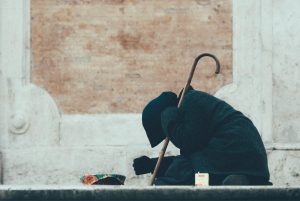
In every society, the poor often become the unseen people whose struggles are acknowledged only in passing, whose hardships are assumed rather than understood. Yet in Islam, their presence is not a footnote. They hold a central place in the spiritual landscape of the believer. The Qur’an speaks of them constantly, weaving their rights and dignity directly into the fabric of faith. It’s a reminder that our connection to Allah is deeply tied to how we treat those who have less.
Empathy toward the poor is not an optional virtue; it is a natural consequence of a heart shaped by faith. When a Muslim prays, fasts, or stands before Allah in humility, that worship is meant to soften the soul. A softened soul sees others with tenderness.
A remarkable pattern repeats throughout the Qur’an: describing believers as those who “establish prayer and give charity.” Prayer cleanses the heart, and charity extends that cleansing outward. This pairing shows us something beautiful our worship is incomplete if it does not spill into compassion.
The Prophet ﷺ embodied empathy in a way that still humbles us today. He sat with the poor, ate with them, and protected their dignity fiercely. He didn’t give from a position of superiority; he gave from a place of shared humanity. When a poor man spoke to him, he never rushed the moment. When someone in need approached him, he never turned away. That tenderness was not a strategy. It was faith, alive and breathing.
To empathise with the poor, one must first understand a simple truth: poverty is not a flaw. It is a test sometimes for those who endure it, and sometimes for those who witness it. People do not choose hardship. A shopkeeper who struggles to feed his family, a refugee starting life over, a widow counting her last coins their circumstances are chapters of destiny that unfold under Allah’s wisdom. Instead of judgment, they deserve understanding. Instead of pity, they deserve respect.
Real empathy moves beyond seeing poverty as a statistic. It requires seeing people as whole human beings with stories, hopes, and dignity. A person selling small items at a roadside stall may be carrying a heavier emotional weight than anyone realises. A mother eating less so her children can eat more is performing an act of unseen heroism. When believers open their hearts, these lives no longer remain invisible.
But empathy does not end with awareness. In Islam, empathy is most powerful when it becomes action. Charity is encouraged not only as financial support but as an expression of solidarity. Sharing food, providing clothing, offering employment, checking on neighbours, listening to someone’s struggles all these weave compassion into the everyday. Even a sincere smile becomes an act of charity. Islam’s beauty lies in how accessible goodness becomes; no believer is too poor to be generous.
Supporting the poor also changes the giver. It scrapes away the rust that slowly hardens the heart. Generosity reminds us that wealth is not a badge of honour it is a responsibility and a temporary trust. It teaches humility by revealing how fragile worldly comfort truly is. A person may be wealthy today and tested tomorrow. Helping those in need becomes a protection for the soul, a shield against arrogance and ingratitude.
There is something transformative in these acts of kindness. They deepen gratitude, enrich faith, and strengthen community ties. A society that cares for its poor becomes a society of stability and warmth. A believer who cares for the poor becomes a believer whose heart mirrors the compassion of the Most Merciful.
Empathy towards the poor is a doorway to Allah’s pleasure. It pushes the soul toward sincerity, gratitude, humility, and softness. The more we cultivate these qualities, the more our hearts begin to reflect divine mercy in small but meaningful ways.
When we look at the poor, we are invited to see more than poverty. We are invited to see an opportunity — an opportunity to help, to grow, and to come closer to Allah through sincere compassion. And in that effort, the world becomes gentler, and the believer becomes richer, regardless of what is in their pocket.
A heart that feels for the poor becomes a heart that walks closer to its Lord.
